

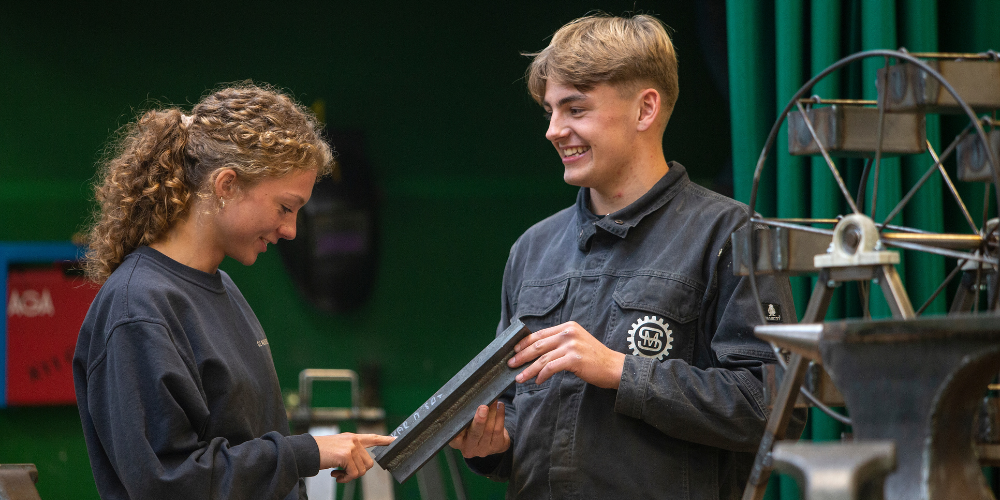
The island's development depends on the education sector. Therefore, it is important for Campus Bornholm to maintain an ongoing, close dialogue with both the business community and politicians.
Claus Stamer, who owns HJB Byg and is a board member at Campus Bornholm, does not hesitate before answering what an attractive educational provision means for the island:
– It means everything. It gives us the opportunity to retain the young people and make them stay here a bit longer than would otherwise have been possible, says Claus Stamer.
As an employer, he is pleased with his close collaboration with the vocational teachers at Campus Bornholm, so the educational institution is also up to date on what is happening in business and the construction industry. For example, he is concerned that too few bricklayers and concrete workers are currently being trained, while many, on the other hand, want to be carpenters. And at Campus Bornholm, they listen to the business community and help apply for subsidies for adult apprentices so that more people can secure a place in the island's labour market, he explains.
– We would very much like to see more young people undertake a vocational education and training programme in industry or the construction trades in general. After all, we have come quite a long way on Bornholm, and we should pat ourselves on the back for that. For we have just reached 30 per cent of the youth cohort taking a vocational education. That was one of the objectives of the project Faglært er Fedt [Skilled is Cool], where the municipality, business community and educational institutions joined forces to strengthen interest in vocational education and training, says Claus Stamer.
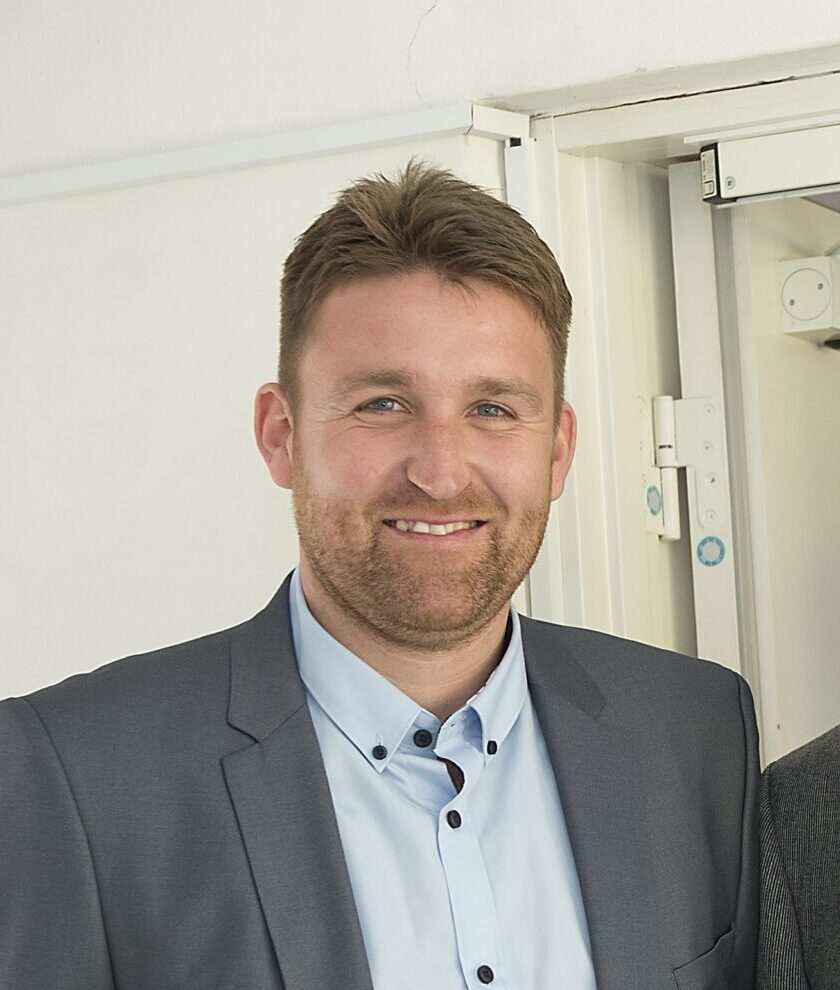
It means everything. It enables us to retain the young people and make them stay here a bit longer than would otherwise have been possible.
Will meet the needs of business
He is supported by the director of Campus Bornholm, Martin Lasse Hansen Sieben, who is pleased with the close collaborations with the island's employers and trade unions, which provide a good understanding of the skills in demand on the island.
– To a large extent, we are quite good at that. Especially in our vocational education programmes, where we train tradespeople, but also through a wide range of shorter courses and upskilling pathways out at the companies. Here, we consult them about what it is they need and what they are lacking. I actually think we are very good at that. This is supported by Claus Stamer, an employer who has sent his employees on courses including an asbestos course at Campus Bornholm.
It is more difficult when it comes to upper secondary education, where many students leave the island after their upper secondary school leaving examination to study elsewhere, and one can only hope that they will return once they have completed their education, explains Martin Lasse Hansen Sieben.
Wants to cooperate with universities
He adds, however, that Campus Bornholm beats the drum to inform its upper secondary students that it is possible to take a number of medium-cycle higher education programmes on Bornholm. This applies, for example, to programmes such as nurse, schoolteacher, educator and social worker. The campus director would nevertheless like it to become possible in the future to take parts of an academic degree at Campus Bornholm, as he believes this could in the long term help retain more people on the island.
– I think we should work towards university institutions like DTU, RUC, the University of Copenhagen and others being able to place parts of their education or course programmes on Bornholm, so that young postgraduate students come over here for a period. In that way, we can spark an interest in the island and the business opportunities that exist here on the island. I believe that is a realistic development in our educational provision. And we must cultivate that even more than we do at present, he emphasises.
Hope for the new municipal council
Also at the municipal level, the campus director hopes for an even greater collaboration.
– I feel that we have a really good cooperation with the municipality at the official level, where we inform each other, support one another and jointly try to seek project funding and projects to truly support the educational landscape on Bornholm. I have worked with many municipalities when I lived on the other side of the water. Among them, few have shown the same commitment to educational issues as I experience with Bornholm's Regional Municipality.
That this is the case is possibly connected to the fact that Campus Bornholm is the island's only upper secondary educational institution, he assesses, adding:
– Secondly, we are in a situation where we are looking at a negative demographic trend. Over the next many years, there will be fewer young people and consequently fewer in the workforce. We are therefore dependent on very close municipal cooperation simply in order to be able to offer education and upskill our workforce, says the director, who nevertheless welcomes broader municipal political cooperation.
– We don't have any collaboration with the local politicians as such, so I hope we'll get more of that with the coming municipal council, says the campus director, who would like to engage with the local politicians, even though Campus Bornholm is a state-owned self-governing institution.
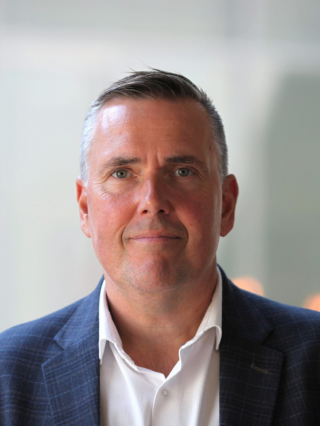
The educational sector is of great importance to the development of the island, so I am hoping for greater collaboration with, for example, the employment committee, the education committee and the children's committee, he says, bringing up the energy island as an example of how the educational sector can advantageously be factored in early in the phase to ensure that the necessary knowledge and competence development are established in time.
– The education sector is of great importance to the development of the island, so I hope for greater cooperation with, for example, the employment committee, the education committee and the children's committee, he says, bringing up the energy island as an example of how the education sector can be usefully incorporated early in the phase to ensure that the necessary knowledge and competence development are established in time.
– Then you have to have a local political focus on education and the development of the island, says the campus director, who, despite the challenges, looks brightly on the future:
– Within the next 5-10 years, we will partly have implemented a new upper secondary education reform. And then I think that we will still have a wide range of upper secondary education programmes and educational opportunities here on the island. Of course limited by our demographics, but I imagine that there is a political will to also maintain an educational level here, says Martin Lasse Hansen Sieben, who hopes that the energy island will be a reality in 5-10 years.
– I'm pretty sure that's going to call for some training, continuing education and skills development, where Campus Bornholm will also be a partner along with many others, he predicts.
BY JOAN ØHRSTRØM