

A necessary effort

Business growth on Bornholm is challenged by a shortage of skilled labour towards 2030, according to experts, who recommend a greater focus on attracting labour from outside.
In March 2023, the Centre for Regional and Tourism Research revealed the results of an in-depth analysis of labour shortages in Denmark's rural districts. The analysis highlights that, amongst other things, strategically building relationships with potential apprentices from across the country can have a significant impact on Bornholm's society.
Senior Researcher Karin Topsø Larsen from the Centre for Regional and Tourism Research (CRT), who has conducted analyses of labour requirements on Bornholm, emphasises that the recruitment effort is extremely necessary:
– Our projections show that Bornholm will lack several hundred skilled workers in the coming years. This is not due to a lack of growth, but rather the fact that many experienced skilled workers are retiring from the labour market. Even if all young people on the island decide to pursue a vocational education, it still will not be sufficient to meet the growing demand.
According to Karin Topsø Larsen, guidance and information on the diversity of vocational education and training programmes is also an essential factor. She therefore calls the 2020-2023 project ’Faglært er fedt’ (Being skilled is great) ”a step in the right direction”.
– Historically, the general perception has been that an upper secondary education was the path to a career and a good job. However, times have changed, and it is crucial to communicate that skilled tradespeople also play a central role in society. Many young people are completely unaware that there are over 100 other vocational options besides carpentry and blacksmithing. At the same time, there is a preconceived notion that skilled work is physically harder than sitting in an office – but if you have your nose stuck to a screen day in and day out, that is also something that can be wearisome.
What else is needed to succeed?
Guidance for young people in their educational choices is a complex task that requires a deeper understanding of the factors that influence their decisions. Changing existing perceptions, which have developed over several decades, will take time. Therefore, it is crucial to think broadly when it comes to recruitment in order to address current challenges. It is important to include several different age groups in this thinking.
■ About the CRT’s study
A study of rural labour markets, which has three recommendations for attracting and retaining skilled labour:
Appreciative leadership
Building relationships with prospective apprentices outside the local area
3: Contact with graduates through project-based collaboration with higher education institutions
The study has been carried out by senior researchers Karin Topsø Larsen and Jesper Manniche, as well as senior consultant Anders Hedetoft at CRT, and the full report can be read online at: bit.ly/crt-landdistrekrut
Source: crt.dk
Collaboration and swallowing camels
Klaus Werner, consultant at Business Center Bornholm, agrees and adds that the island should build upon the good work achieved through 'Faglært er fedt' [Skilled is great].
– Under Faglært er fedt, we established a steering group and an advisory board with stakeholders from associations, the business community, foundations, companies, the municipality and educational institutions. Everyone was good at listening to each other's challenges, being open and even swallowing a few bitter pills in the areas where it was difficult to find solutions for the benefit of the whole of Bornholm. They deserve great praise for this, and my hope is that this willingness to cooperate will not stop.
What is the biggest challenge?
– On Bornholm, the challenge is that there are too few educational programmes, but a broad need for labour across all trades. For example, we only have one airport with space for a single airport operations apprentice, and a vocational school cannot make money by training people for just that. Therefore, Faglært er fedt is collaborating with the municipality to highlight that Bornholm is also very keen to attract more adults. We are already well under way, and in fact, half of the agreements currently concluded are adult apprentice agreements.
– The project is also in ongoing dialogue with the island's businesses regarding the need for apprentices in the near future, and this information is passed on. In addition, we always encourage businesses to apply actively and, among other things, use the website lærepladsen.dk
What is a long-term goal?
– It would be fantastic if Bornholm got a school hostel! A scheme was adopted a few years ago where young people in Denmark can apply to live at a school hostel during a vocational education and training programme if they have more than an hour and a quarter's travel from their home to the workplace. It doesn't cost anything when you're under 18, and otherwise it costs a little over 2,000 kroner a month for board and lodging. Unfortunately, we cannot offer that on Bornholm, and therefore some businesses build their own accommodation or use resources on finding rooms they can make available. It's an expensive solution – and not ideal at all.
How should a boarding school be realised, and why is it a good investment?
– We must engage in dialogue with the state regarding the possibility of an exemption and the stakeholders who could be interested in contributing to making a residential school a reality – for example, the municipality, private investors, and foundations. A residential school is a valuable investment in relation to the growing shortage of qualified labour. Many are subsequently employed by the companies where they are apprentices, making it a win-win situation for all parties.
BY TINA TOFT MØLLER
■ What is a vocational education?
One achieves the status of skilled worker by receiving a certificate of apprenticeship within a specific trade. This is achieved through a vocational education and training programme (eud) or vocational education and training for adults (euv). In a broader sense, being skilled means having a solid educational background as a basis for carrying out one's job.
Source: uddannelsesguiden.dk
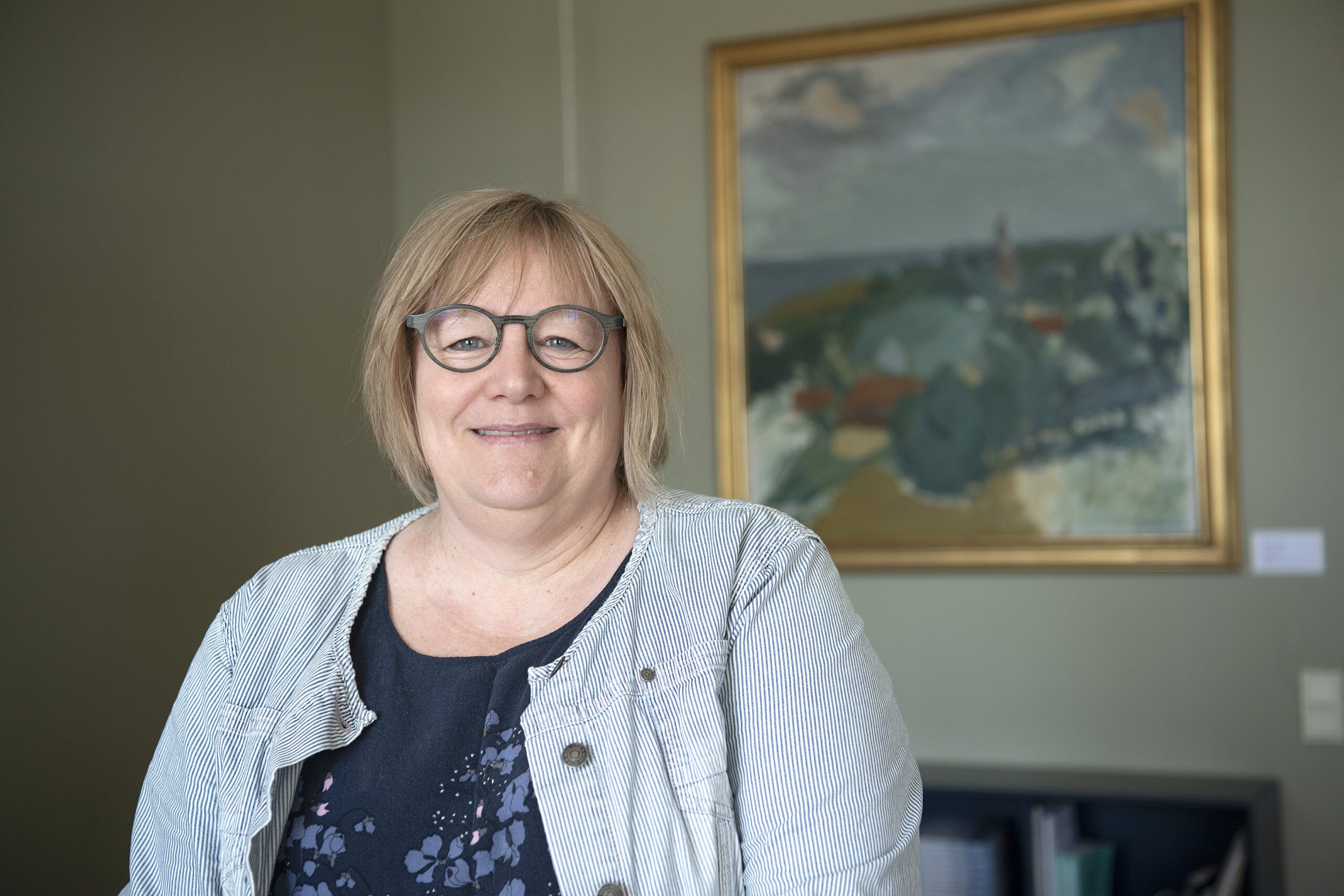
Senior Researcher Karin Topsø Larsen from the Centre for Regional and Tourism Research (CRT).
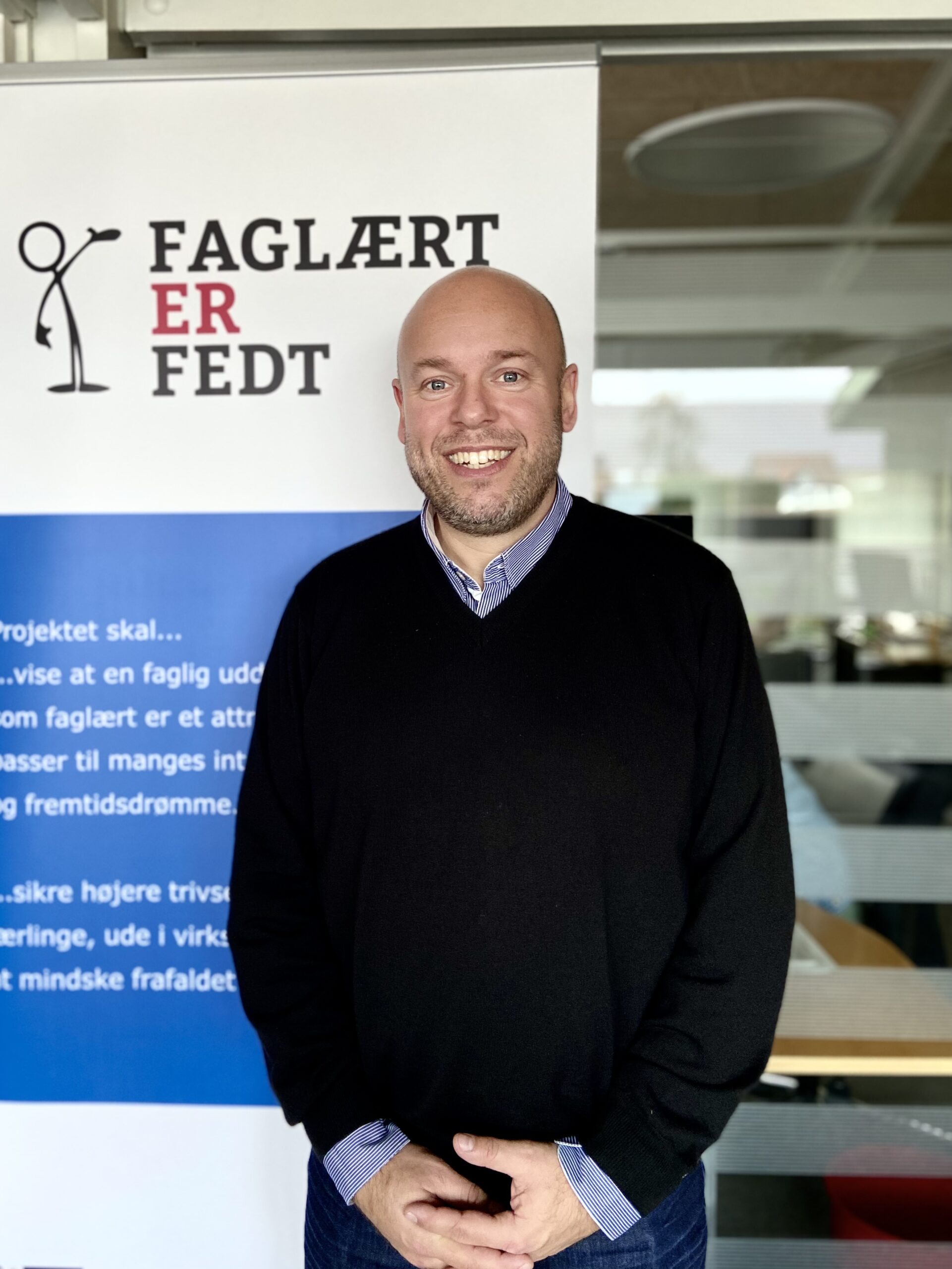
Klaus Werner, project consultant at Business Center Bornholm (BCB).