
Bornholm agriculture stands stronger in
the future, if we succeed with the green tripartite agreement
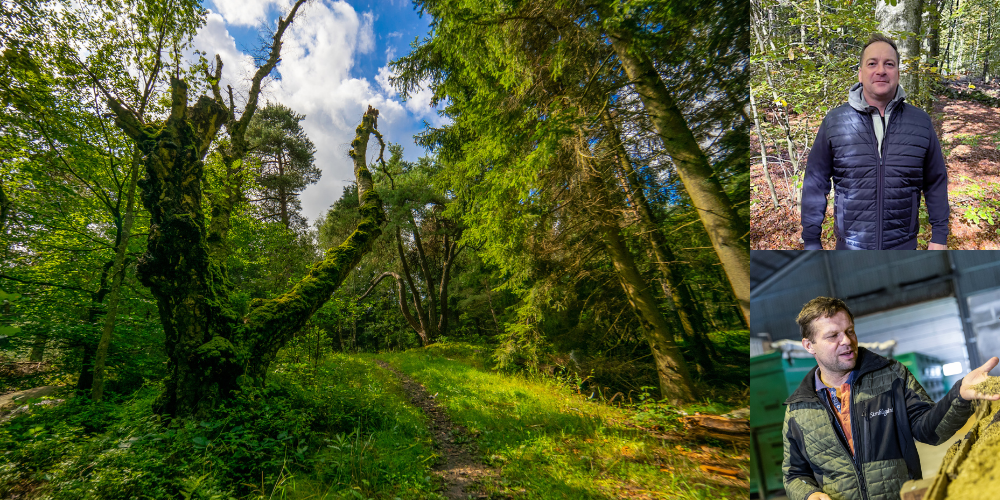
Farmer Jacob Svendsen (top right) has sold parts of his land to the Danish Nature Fund as part of the green tripartite agreement – and, like the chairman of Bornholm’s Agriculture & Food, Lennart Westh (bottom right), sees great opportunities for agriculture to lead the way in the green transition.
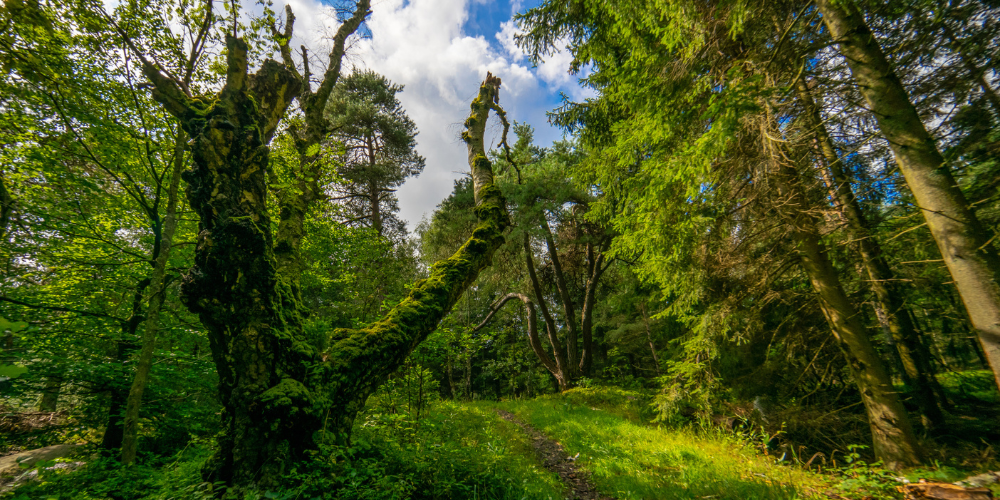
Photo to the left, forest in Paradisbakkerne: Destination Bornholm/Martin Birk
Farmers know their land and know where it makes sense to restore nature. If they are fairly compensated, it can benefit both agriculture and nature, according to farmers on Bornholm.
One of Bornholm's scenic areas at Randkløve Skår has been sold to the Danish Nature Fund as part of the green tripartite agreement – a national initiative designed to support the green transition and strengthen nature and biodiversity throughout the country.
The sale brings with it an important change: commercial forestry is no longer to take place on the nature area in question. Instead, the 50-hectare site is to be transformed into wild nature. And for the previous landowner, farmer Jacob Svendsen from Ellesgård, there is a particular logic in turning the area into a piece of free nature for everyone to enjoy.
– Part of the land is not optimally shaped for modern agriculture with large machinery, and the area has many rock outcrops. The forest area has a beautiful location, but the challenging terrain with rocks and steep slopes limits the possibilities for modern forestry, he explains, adding:
Therefore, it makes good sense for me to sell to a conservation foundation that will transform the area into nature for the benefit of biodiversity, the climate, and nature experiences for us all.
Want to help green development
For Jacob Svendsen, the sale of the land means that he can no longer grow the same amount of grain for animal feed or supply the same quantity of grass seed to the local DLF branch in Aakirkeby – which is used, for example, on football pitches and golf courses – he explains.
– In addition, I’ll also have to reduce the area under rapeseed, which otherwise supplies seed to the local oil mill, Lehnsgård.
Converting agricultural land to wild nature can therefore seem to conflict with the interests of farming on the island, points out Lennart Westh, who is himself a farmer at Simblegaard and chairman of Bornholm Agriculture & Food.
– When we choose to make room for biodiversity and nature, it means that we take some agricultural land out of production, and then agriculture loses some area on the island. But on the other hand, it is a way to find a compromise – a sort of ’license to produce’. It may even become a legal requirement that a part of the agricultural land must be converted into nature, he says.
– So even though we are losing land under the ‘green third’ scheme, we need to take a positive approach to this, as it also forms the basis for our future production. And we are helping to ensure that the transition takes place in the way that best serves the farming sector.
In other words, the areas that are taken out of production are usually those with the least agricultural value, he explains.
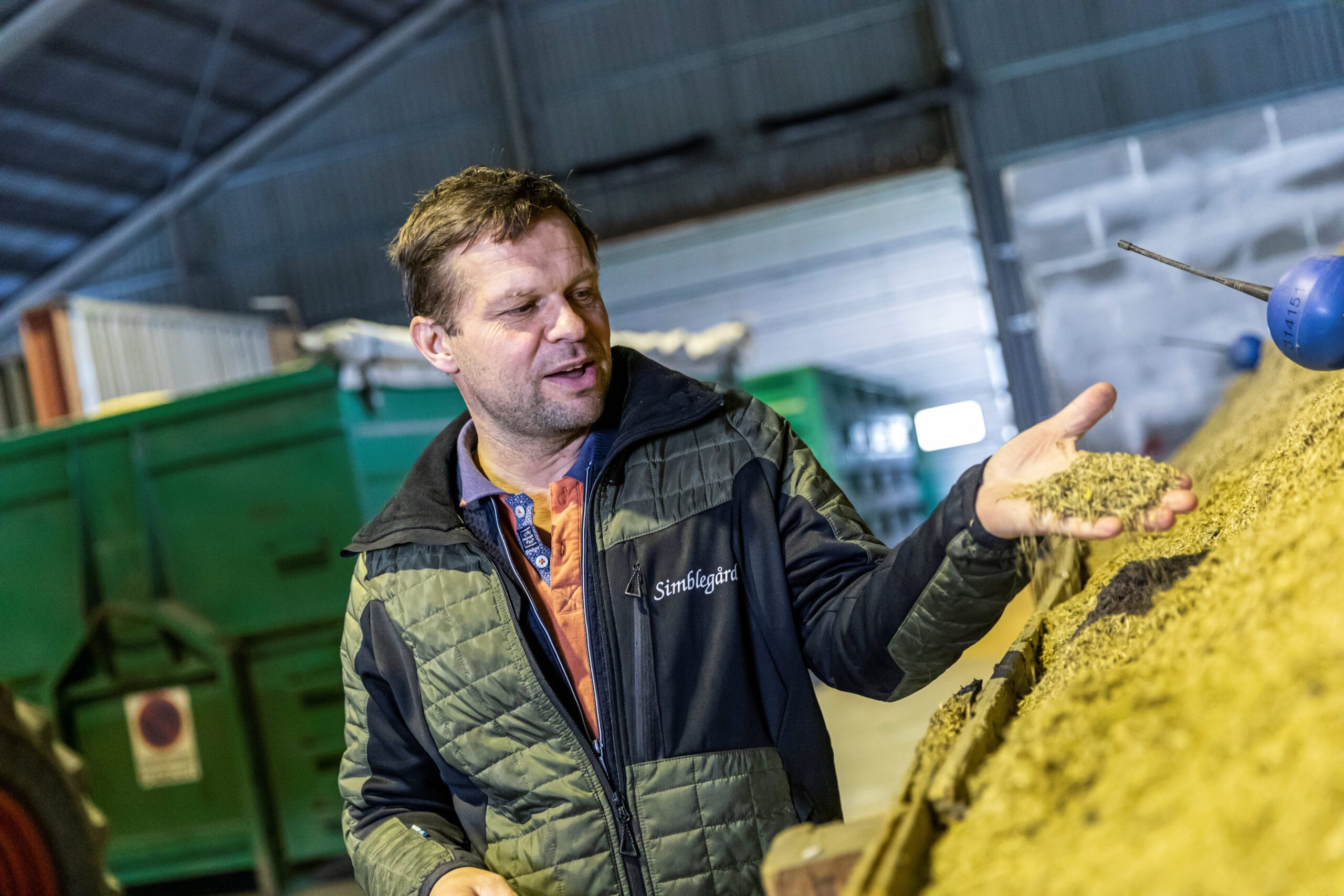
We face a huge challenge in tackling climate change, and we must find a solution. As the agricultural sector, we want to play our part. And if we can fulfil our responsibilities, Bornholm’s agricultural sector will be in a strong position for the future.
At the forefront of developments
Lennart Westh points out that Bornholm's farmers are already doing more for the green transition than they are actually obliged to do. The island's farmers are in fact exempt from some of the national requirements to reduce nitrogen emissions. Even so, they support the idea of better connecting Bornholm's nature – from Hammerodde to Almindingen – as a joint signature project.
– For now, there is a draft where the plan is to preserve agricultural areas here and there, but with connected nature areas in between. However, as I have pointed out, the nature area might in some places become narrower and wind around a bit, says the chairman, emphasising that the green tripartite agreement is still based on voluntariness from the individual landowners.
That is why, he believes, some effective schemes need to be put in place that landowners can identify with. For example, there is an ambition in Denmark to plant 250,000 hectares of forest.
– I don't think it's a realistic scenario that fields are converted into forest without the landowners wanting to do so beforehand. And then perhaps it's the financial incentive that can provide the final push. But the problem is that you reduce the property value. The land becomes less valuable with forest, and the compensation you receive only covers the actual planting. So the challenges are fundamentally about finances, says Lennart Westh.
He proposes a two-track model where farmers can either sell their land to the state or convert it into nature in return for fair compensation. This is to ensure that the economy does not stand in the way of more nature.
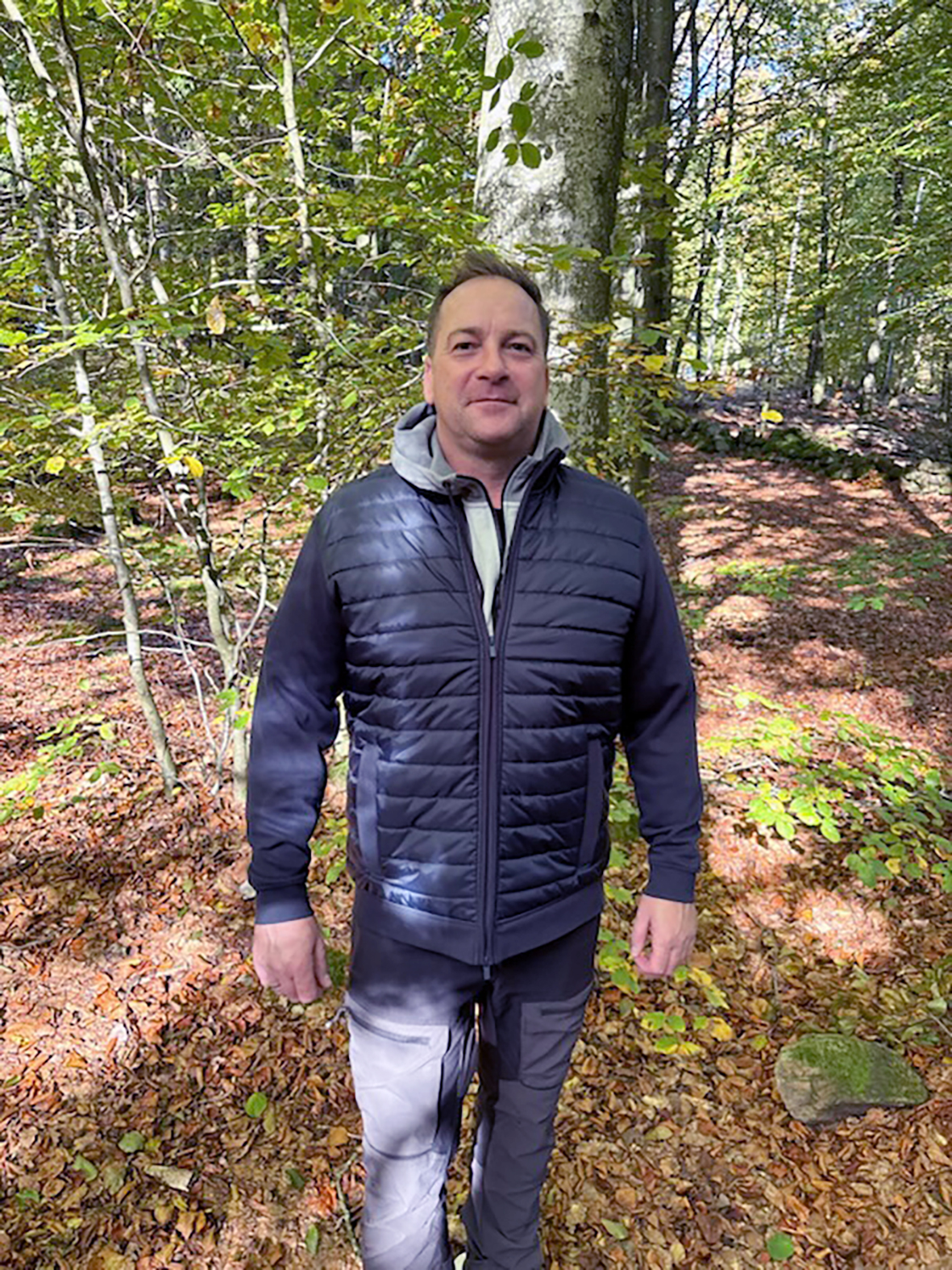
Agriculture is an important piece in this game, because we can contribute with knowledge, as we as landowners, often being owners through generations, know our soil and thus know where it is profitable to cultivate and where it may be more appropriate to convert to nature.
Believing in the future
According to Jacob Svendsen, farmers can also play an important role in the transition from agriculture to nature, because they know where it makes the most sense.
– Agriculture is a key player in this game because we can contribute our knowledge; as landowners – often for generations – we know our land and therefore know where it is profitable to farm, and where it may be more appropriate to convert the land to nature conservation, says Jacob Svendsen, who is also optimistic about the future of agriculture.
– From an economic perspective, the agricultural sector is in good shape, characterised by an economic boom with favourable prices for animal products, a good harvest with low costs for drying, for example, falling interest rates and slightly rising land prices, says the Bornholm farmer, who would simply like to spend less time on »new rules and requirements for increased documentation of what we do”.
Lennart Westh emphasises that it is also in the farming sector's own interest to look after nature, and that farmers are therefore happy to contribute. And if they succeed in their work concerning the green tripartite agreement, he is optimistic about the future of agriculture on Bornholm in 10-20 years:
– If we succeed, it will create some favourable conditions for us. Because I believe and expect that, in the future, there will be an even greater demand for the food we produce. One scenario, of course, is that in 15 years’ time there will be areas of land in southern Europe that can no longer be farmed, he says, adding that in that case there will be even more pressure on the land we can still farm.
– And we must manage that in a good way without exploiting nature, says Lennart Westh, who hopes that the future of agriculture on Bornholm will not only get a grip on the nitrogen challenges, but also tackle CO2 emissions – an issue which he believes is overlooked in the current debate.
– I hope we have managed to solve the task regarding biodiversity and that we have found a solution to the nitrogen problem, so that we don't have the same climate impact. The debate is not about CO2 emissions right now, but we know that a CO2 tax is coming in a few years, he says and concludes:
– We have a huge task ahead of us regarding the climate challenges that we need to solve. And from the agricultural sector's side, we want to help take our share. And if we can shoulder our responsibility, Bornholm's agriculture will stand strong in the future.
BY JOAN ØHRSTRØM