
Energy Island Bornholm enters a new phase:
Local businesses must be ready
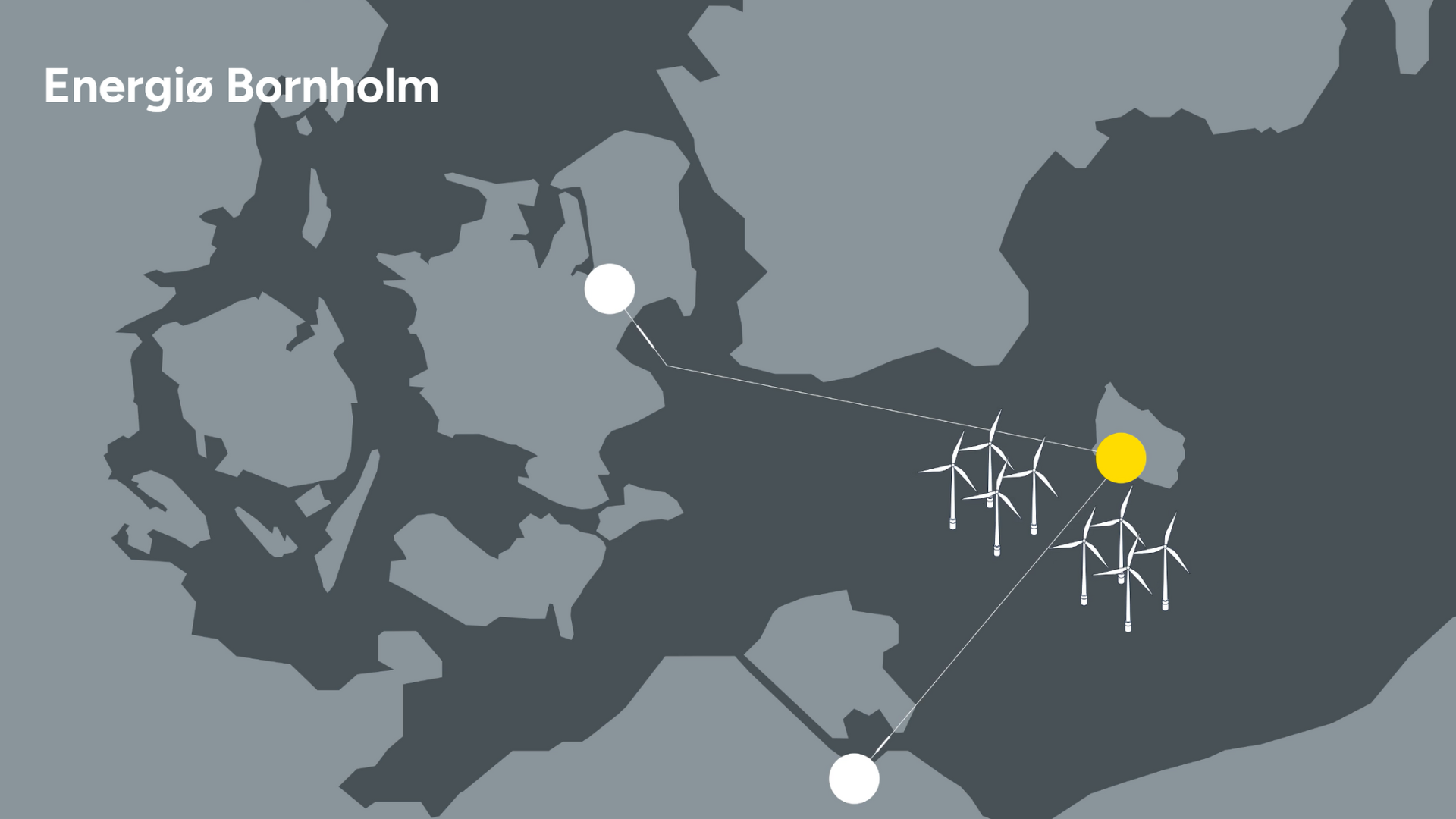
Energy Island Bornholm is now moving from vision to reality. Søren Møller Christensen, Baltic Energy Island, and Christa Lodahl, Business Center Bornholm, discuss the project's status, future perspectives and local opportunities.
What is the status of the Energy Island project right now?
In September 2025, the project took a major step forward. Denmark and Germany signed a joint agreement with the EU on funding of 645 million euros through the so-called Connecting Europe Facility, which supports projects that are important for the development of a common European energy system.
At the same time, Energinet and the German partner 50Hertz entered into contracts with Siemens Energy and NKT. Siemens Energy is to supply the electrical equipment for the three onshore installations in Germany, on Zealand and – not least – on Bornholm, while NKT is to manufacture and lay the cables that will connect Bornholm to Zealand.
In addition, the so-called civil works tender, which includes the construction of the halls where Siemens Energy's converters are to be installed, has now been put out to tender with contract award expected in the summer of 2026.
– We are starting to get to know the names of the major players who will construct the energy island towards the mid-2030s, says Søren Møller Christensen.
However, the final piece is still missing. An updated agreement between Denmark and Germany on the distribution of costs is expected to be concluded during the autumn of 2025. The existing agreement covers the costs of the infrastructure, while the new agreement must also include the distribution of financial risks regarding the offshore wind component.
– A new agreement between Denmark and Germany on the sharing of costs is expected in the autumn – and everything indicates that it will soon be finalised, Søren says.
We have now entered a new phase, where the plans are turning into concrete action. With the recently concluded agreements with Siemens Energy and NKT, and with EU funding at our backs, the project is moving into reality.
What is an energy island and what does it consist of?
– The energy island is a flagship project for the European green transition. Bornholm is going to lead the way for similar projects in the Baltic Sea and the North Sea. It will be the first time a single project both connects two countries with an interconnector and at the same time, via a shared hub, collects large amounts of green energy from offshore wind, Søren explains.
In terms of infrastructure, the energy island consists of three central parts: the offshore wind turbines, the onshore facility and the cable connections. The offshore wind turbines will be placed on Rønne Banke south of Bornholm at a distance of at least 15 kilometres from the coast and with a total capacity of at least three gigawatts. The electricity is sent via subsea cables to Bornholm, where it is routed to the onshore facility. Here, the electricity is converted from alternating current to direct current, which enables it to be transported further over large distances – to Zealand and to Germany.
From Bornholm, the electricity is transmitted further via two high-voltage direct current cables: one to Zealand with a capacity of 1.2 gigawatts and one to Germany with a capacity of 2 gigawatts.
– Bornholm has the potential to become an electrical hub in the Baltic Sea and a crucial element in the EU's plans to establish new electrical ”highways”, Søren explains.
What is the timetable?
– The archaeological excavations are already underway, and in 2026 we expect to sign contracts with the contractors who are to construct the buildings, with construction starting in the summer of 2027. In 2029, Siemens Energy will begin the installation of the converters, and in 2032 the testing phase starts, says Søren.
Concurrently, the offshore wind is being tendered. The schedule for this part is not known quite as precisely at present, but the first part is expected to be connected around 2032, after which approximately 1 GW can be connected annually towards full operation around the mid-2030s.
The project will therefore shape Bornholm over the next ten years, and with a total budget of more than 100 billion kroner, it holds major opportunities for Bornholm's business community and society – both through construction activities, investments and new partnerships between local and international actors.
What potentials does the project hold in relation to creating local growth?
Energy Island Bornholm has the potential to give Bornholm a significant economic boost and strengthen the island's business community on several levels. The local impacts can be described in three tracks: temporary jobs, lasting business development and knowledge building.
– During the construction phase, we expect thousands of temporary jobs to be created. Many occupational groups will be needed – contractors, electricians, fitters, transport, logistics and service industries. But hotels, restaurants and retail are also expected to benefit from the increased activity, says Christa Lodahl.
– The project is so large that the main contracts will primarily be handled by larger companies and consortia, but our expectation is that there will be high demand for subcontractors, she adds.
– When the energy island is completed, permanent jobs within operation and maintenance will be created, and an energy business park can attract new green production, says Søren. The ambition is that Bornholm's business community can be supplemented with a new, stable sector within green energy – side by side with tourism, agriculture and the existing industry on the island.
The third impact that the project will yield concerns education and innovation. Through the Residential College at Rønne Gl. Elværk, the ambition is to strengthen both vocational education and training and create an international research and educational environment focusing energy systems and energy island technologies.
– Bornholm can act as a living laboratory where students, researchers and businesses develop new solutions, Christa explains. This provides not only professional benefits, but also a long-term attraction of skills and investment to the island – which existing Bornholm businesses can also benefit from through collaboration with students and researchers.
AF LINA HILDING
How can you, as a local business, seize the opportunities surrounding Energy Island Bornholm?
The energy island project opens up major investments, new partnerships and a significant boost in the demand for local skills.
Through the Baltic Energy Island – Strengthened SMEs project, which is funded by the European Union and the Danish Board of Business Development, we can help you get ready to seize the opportunities that will arise.
You are given access to:
- Insight into upcoming tenders and contracts related to the energy island and other construction projects – enabling you to plan and position your business in good time.
- Networks and professional groups where companies are equipped for new needs, partnerships and market opportunities.
- A targeted business programme with experienced advisors who help you adapt, professionalise and develop your business so that you can make the most of the energy island's potential.
- Events and excursions where you gain new knowledge, inspiration for your strategy and the opportunity to expand your professional network.
Contact Business Center Bornholm to find out more: info@bornholm.biz.