

Greater diversity in school visits to businesses
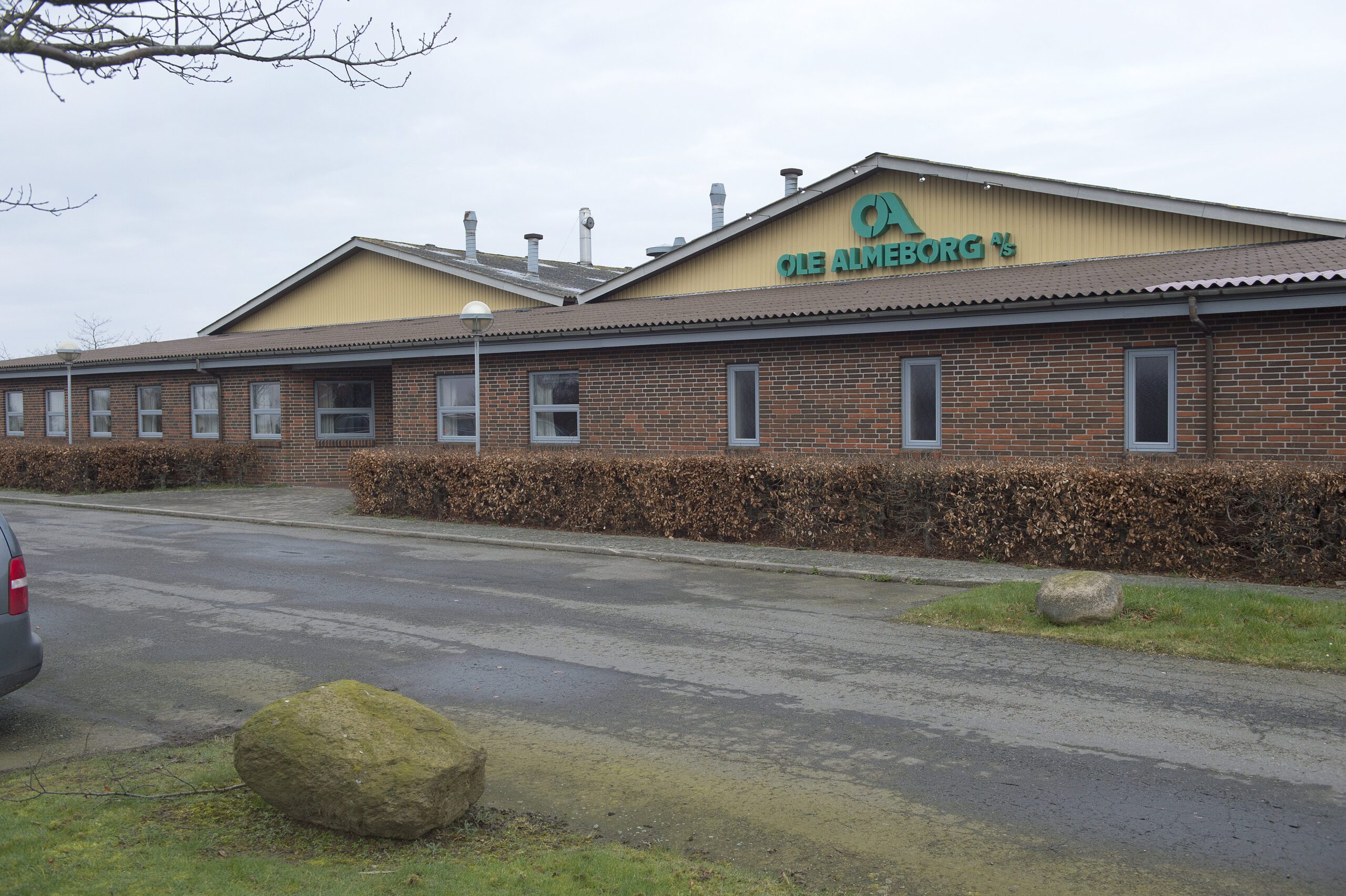
The 'Faglært er fedt' project is the driving force behind a company directory that has made it easier for schools to go out and experience several different types of skilled trades realities. Here, Klaus Werner, project consultant at Business Center Bornholm, and CEO Michael Almeborg from Ole Almeborg A/S, explain how a meaningful company visit works in practice.
On Bornholm, where challenges often inspire creative solutions, a project called Faglært er Fedt (Vocational is Brilliant) has introduced a completely new approach to school and other educational institution company visits with a business catalogue. The original plan was to launch a catalogue featuring role models from various fields who could then be invited out to talk about their trade.
Then came the pandemic with school closures and other restrictions. The project's consultant, Klaus Werner, a former schoolteacher, had the opportunity to reflect on how school visits to businesses could be more rewarding: – When you are out in real-life work environments yourself, you get a completely different experience. It is more fun, and you remember and understand what you are learning much better because you have all your senses in play. There was just a lack of a structured approach to organising these visits, he says, adding that visits previously often depended on ”coincidence or personal contacts”. In 2021, when Denmark opened up again, he therefore called around to businesses to ask if they would like to be available with simple information such as name, telephone number and email address in a clear, digital business directory that could ease the planning work for them and for the schools.
– It didn't result in many more company visits, but a lot more diversity was brought into the choices, says Klaus Werner. – Previously, schools often visited the island's best-known companies, but now they began exploring several different types of companies and thereby gained a broader experience of the opportunities within vocational education and training.
Success in several ways
Klaus Werner himself participated in briefings with the students before the visits. He encouraged them to have an open and curious approach to the companies, even if they did not think the topic interested them.
– Among other things, I told them that they were going out into businesses where people are busy, but made time to welcome them – since we obviously wanted the businesses to be willing to take on students again. Furthermore, they could also end up learning something that might be of interest to a friend, sister or brother. And that worked really well, says the project consultant, who knew that when the students showed interest, the businesses gave them even more time and attention, creating an extra rewarding experience for both parties.
In connection with the Skilled is Cool project, a workshop was also held focusing on what constitutes a good company visit and what expectations there should be from both sides. It also emerged here that even if the companies do not become a future apprenticeship placement for the visitors, the visit can, among other things, contribute to clarification and soften gender stereotypes.
– It is interesting to talk to the pupils before and after a company visit, says Klaus Werner. – For example, a year 9 class visited KH Maskinfabrik ApS, which specialises in steel. Before the visit, the girls had said that it was not for them, because ”they couldn't possibly become blacksmiths – it was too physically demanding”. After the visit, we asked them again, and although no one took an interest in the blacksmith training right there, they had changed their perception of the trade and felt that it was actually something they could do. In that way, it was a great experience, because they saw with their own eyes that female apprentices are natural in a workshop.
The project has helped to kick-start a lot of valuable initiatives, points out Klaus Werner: – Bornholm Regional Municipality has decided to embed several of the project's initiatives, including the business catalogue and information about apprenticeships. This can become a valuable resource for Bornholm in the coming period, when it faces challenges in attracting and retaining young labour.
– The project has created an exceptional opportunity for school pupils on Bornholm to explore business and educational opportunities in practice. It has also strengthened the bond between schools and businesses, which is an important driver for more young people opening their eyes to the possibilities within the vocational education pathway.
The recipe for a successful company visit
Naturally, the workshop also gave the companies an opportunity to reflect on what they could do in general to improve their visitor experience.
”Overall, it's good when companies think about the target audience they're dealing with,” says Klaus Werner. ”At one point, I was on a visit where a passionate young apprentice showed us around. She was nervous and excited in a good way, and she didn't want to fall short, so she used a lot of technical jargon – she was brilliantly competent, but the pupils didn't understand her. It was a good experience because it has helped us make companies aware that it's completely okay to say things like ”gizmo' when they have school visits. Of course, they shouldn't talk down to the pupils, but they need to realise that the pupils aren't into their trade in the same way as they are themselves. At the same time, it gave us an understanding that the pupils must always be encouraged to 'put their hands up' and ask questions if there's something they don't understand, because there is no expectation of prior knowledge.".
Managing Director Michael Almeborg from Ole Almeborg A/S agrees with that. The company offers a well-rounded apprenticeship in the smithing trade, which includes both the use of technological drawing software and knowledge of – and working with – metals. He believes it creates a good dynamic when there is a dialogue, and he does not think one should follow a rigid template.
– We have one to two company visits a month, both from primary/lower secondary schools and vocational classes from Campus Bornholm, and for us the most important thing is that we tailor our programme and experience to the students we are in contact with. Therefore, it is not always the same person who gives the tour, as it depends on the purpose and the target group. The visit also depends a great deal on the questions asked. Some want to see a bit of everything, whereas others find it more interesting to see the newest and most modern equipment within the trade.
What motivates you as a company to do this – what do you get out of it?
– We are, of course, pleased to be able to spread awareness of the blacksmith training programme, as well as the many continuing professional development opportunities available within the trade. We do not measure directly whether our apprentices have visited our company at some point, but we think it is important to build relationships with young people as early as possible. It is a bit like a football coach travelling around scouting for talent – we also go out to the Campus and keep an eye on who shows an interest in us and in the trade. We want to know the potential!
– Although we also had company visits before the company directory was invented, we have no doubt that we should of course be part of it. We know that we are in competition with all sorts of other companies to attract apprentices, and therefore it is about making ourselves as ”appealing” to potential candidates as possible. The latest initiative is that we have ”adopted” a reception class from Svartingedal School; they have been here twice... the first time they got cake and something to drink, and we cut their names out in steel, which they then painted during their subsequent visit. The idea is to build on knowledge experiences for each school year that passes, so they get an insight into what it is like to go to work. The idea for this experiment is the result of us having participated in "Faglært er fedt" [Being a skilled tradesperson is great], where we were inspired to try tackling it a little differently.
What is your best advice for companies organising a visit for the first time?
– Think about who is coming and how you can catch their attention – and make sure to serve it all at eye level.
BY TINA TOFT MØLLER
■ 7 good tips
– based on real-life experience
1. Get started
The need to promote yourselves as a workplace is only going to grow in the future. Especially if you need skilled labour.
2. Don't let yourselves be frightened
It might sound like a big effort to get started. However, it doesn't have to be. On social media, you can go a long way with few resources.
3. Think about who you are
Carefully consider what you want to say about yourselves. What is particularly good about your workplace? Because that is what your communication needs to reflect – on your website, on social media, in job advertisements, etc.
4. Have a go
The most important thing is to get started and see what works. First and foremost, you should consider ongoing communication on social media: Show, for example, that you have a strong purpose, that you celebrate successes, that you are active in the local community, that you have good social events, etc. Experiment and see where you get the best response.
5. Prioritise the task
Perhaps you won't get much of a response to the first few posts. But make the task a priority once you're underway. For example, set a goal for a specific number of posts on Facebook per week.
6. Get active locally
Attend job fairs and the BUM fair for young people from Bornholm. Hold open house events, invite local school classes for visits, take on interns, and participate in the local community through sponsorships and the like. It costs a bit, but it is an effective way to showcase yourselves.
7. Advertise job vacancies
Advertise vacancies formally. And use the free opportunities to draw attention to your postings. Use at least your own pages on LinkedIn and Facebook, Jobnet.dk and the Facebook group ”Job på Bornholm”. Also sign up on lærepladsen.dk if you have or are looking for trainees and apprentices.
8. Welcome applicants properly
Consider who would be a good contact person and make sure to prepare them well for the task. How can she best tell your story, and how does she ensure that applicants feel welcome?
Source: Faglærterfedt.dk
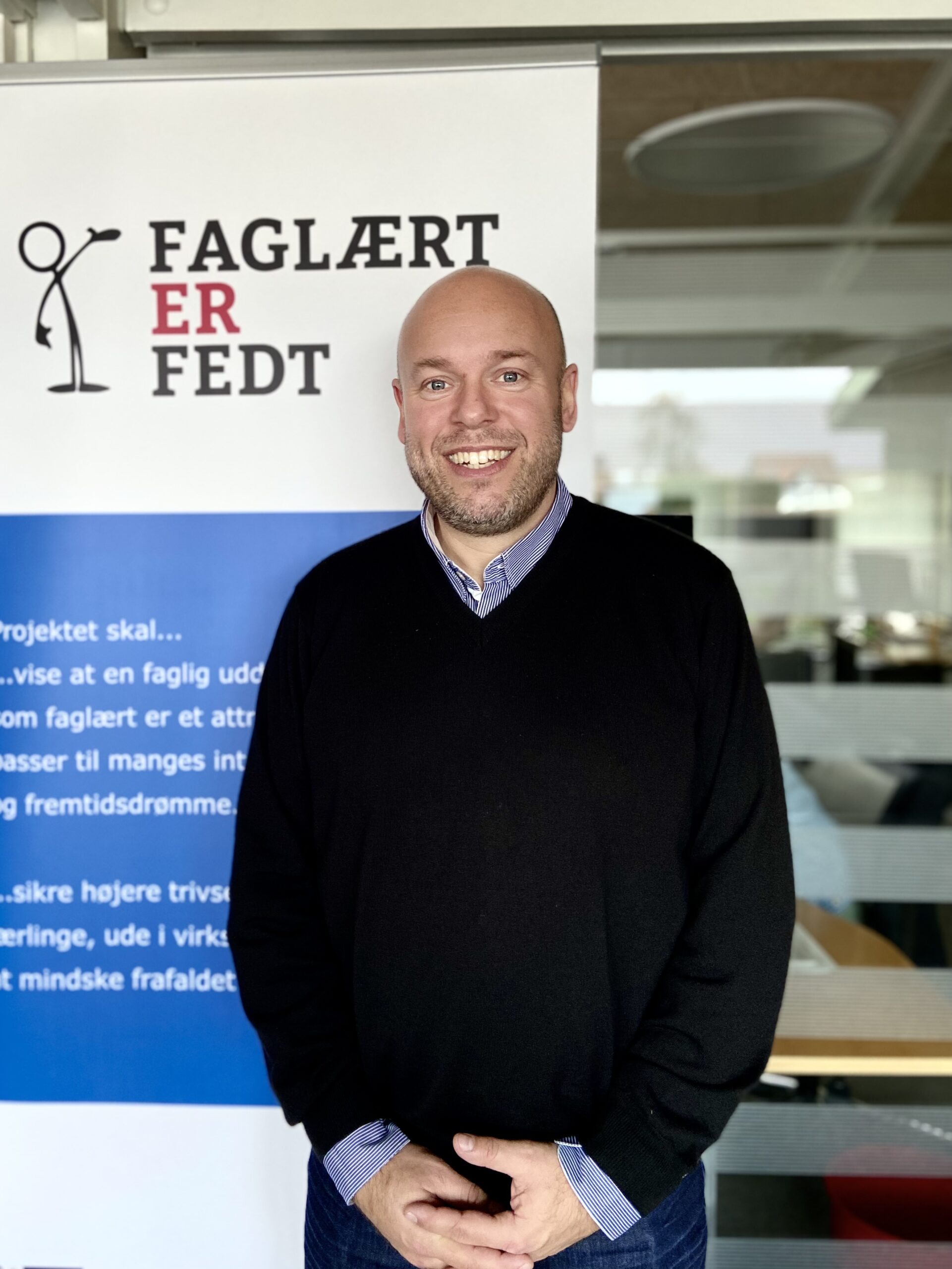
Klaus Werner, project consultant at Business Center Bornholm (BCB). The organisation, together with other stakeholders, has created a business directory that has simplified schools' opportunities to explore a wide range of professional realities.

Director Michael Almeborg from the company Ole Almeborg A/S. The company has nearly 70 employees and trains many blacksmiths. It is known for the production of internal transport equipment – especially pallet trucks and custom solutions with a focus on quality and ergonomics. Everything is produced on Bornholm. See more at almeborg.com