

New unique ESG network to strengthen sustainability efforts on Bornholm
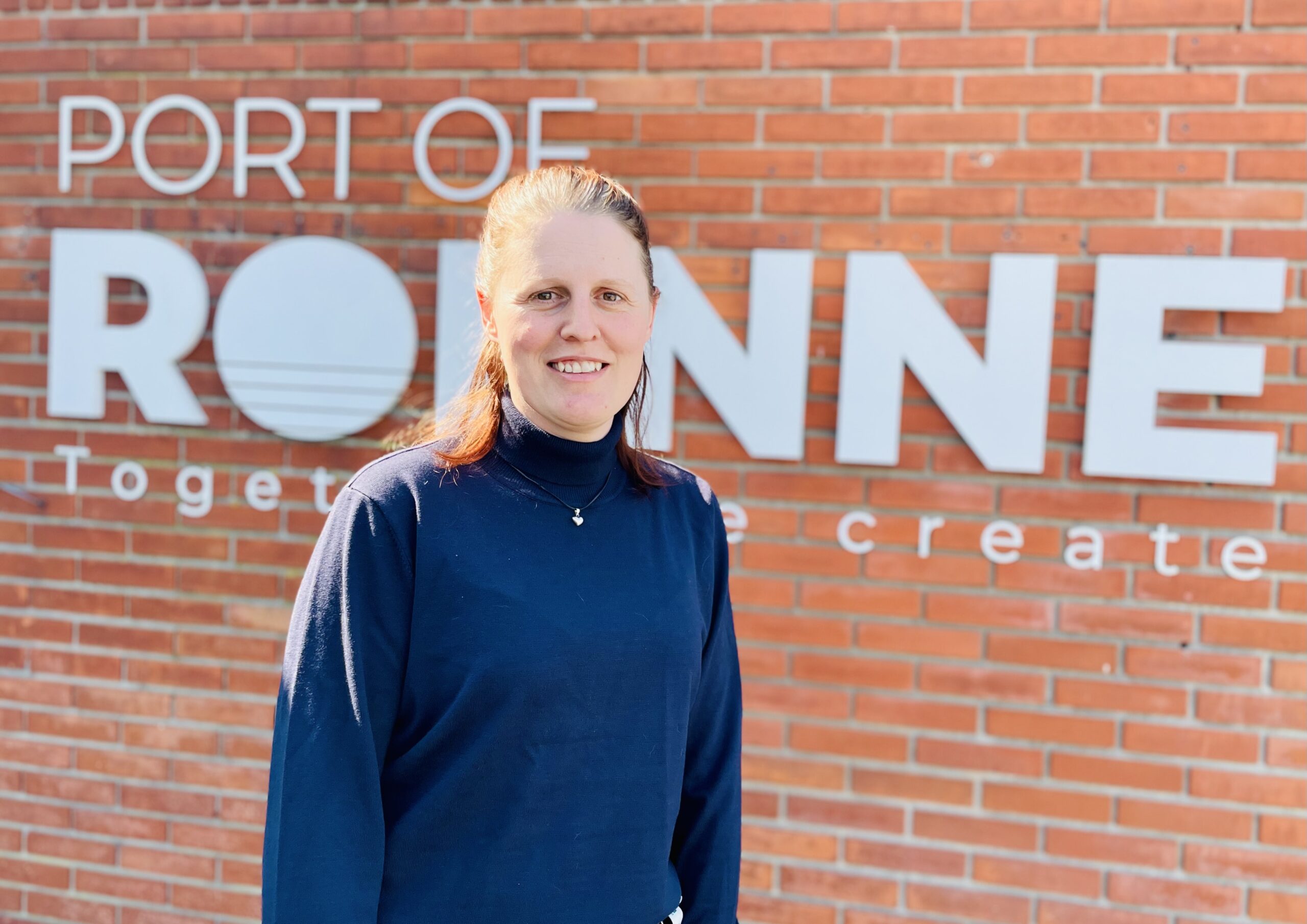
Susan Hansen, QHSE & Sustainability Manager at Port of Bornholm, is the initiator behind a new ESG network on Bornholm. Photo: Port of Bornholm
The establishment of a local ESG network is the focal point of a collaboration between Rønne Havn and Business Center Bornholm. The purpose of the network is to help local businesses with their sustainability work through knowledge sharing and skills development.
The requirement for corporate sustainability reporting has increased significantly in recent years. Consequently, the concept of ESG, which stands for Environmental, Social and Governance, is becoming increasingly prominent in the business world.
– Essentially, it is an umbrella term for environment, social conditions and corporate governance, and ESG is growing as an EU directive has also been introduced that sets out guidelines for how companies must report on their sustainability efforts, explains QHSE & Sustainability Manager Susan Hansen from Rønne Havn, who is the initiator behind a new ESG network on the island.
– The challenges regarding ESG efforts are completely different on the other side of the water compared to here on Bornholm. Our intention has therefore been to investigate the possibility of exchanging knowledge and experience with other companies on the island that also work with ESG.
Strong support
Because the challenges can be somewhat different when you are located on Bornholm, just as it can impose limitations. And quite specifically, having an address on Bornholm presents certain logistical challenges, she explains.
– The idea was therefore to create a kind of forum with space to ask the questions that arise along the way in a company's individual ESG practice. Because we are at different levels, and some are further ahead than others, and we are also very different company types and structures, says Susan Hansen, who therefore found it obvious to reach out to Business Center Bornholm, where the idea of such a local ESG network also made more than good sense.
– Typically, there is only one person in the company who works with ESG. Being part of a dedicated group and being able to bounce ideas off others can therefore be crucial for companies' systematic work with ESG, enabling them to meet both regulatory requirements and market expectations.
That is according to Jørn Pedersen, Senior Business Consultant at Business Center Bornholm.
– Together with Rønne Port, we therefore figured out how such a network could work, and from there our role has been to facilitate it and thus reach out to more of the island's businesses to gauge whether there was an interest in the idea. But the thought is that it is the participants who set the agenda for the specific topics of conversation, and then we set it up, explains the facilitator of the network, who can report that support is already strong.
The network currently has 12 member companies. For now, the EU also only requires the largest companies to report on ESG. Even so, it makes good sense for smaller companies to acquire knowledge in this area.
– As a customer or supplier, you might risk being contacted by some of the larger companies, which for example need to know what the carbon emissions are for a gadget that they have bought 10,000 of. And if you are a small business, you might find yourself in a situation where you don't know what they are talking about at all. So in such situations, it's good to have someone to talk
says Susan Hansen, who is backed by Jørn Pedersen.
Benefits both small and larger businesses
– Although the smaller businesses are not themselves legally required to report, it may well be that some of their large partners are and are passing requirements down through the hierarchy, needing information on both climate footprint and working conditions, such as whether child labour is used in their production.
In this way, it is expected that the EU's requirements for the largest companies regarding ESG reporting will trickle down through the corporate hierarchies, eventually reaching small Bornholm-based businesses as well, he elaborates.
– We already have a number of businesses on Bornholm which, at least in the coming years, are going to have to report because they have major partners who demand it, he says, explaining that the network's purpose is thus to create a forum where small and medium-sized enterprises can strengthen their sustainability work through cooperation and the exchange of experience.
What specifically does the network offer?
– It offers knowledge and experience sharing, competence strengthening and skills development. The network simply exists so that we can mutually equip one another for future challenges when it comes to ESG. The network will also work to promote local educational opportunities in sustainability and the green transition, which can strengthen Bornholm's businesses, says Susan Hansen.
Who can join in?
– The network is aimed at Bornholm businesses that have dedicated resources to work with ESG, just as they must have a certain amount of experience in the field so that we have a common baseline in terms of knowledge level when we talk about the various [issues] – some are further ahead than others, but it is crucial that one has a good idea of what it is one is talking about, says Susan Hansen, who is looking forward to the network raising awareness of what ESG is in the daily operations of many more of the island's businesses.
– When more of us work towards the same goal, we can also get more initiatives created on the island, which in that way can help support the green transition, she concludes.
- BY JOAN ØHRSTRØM
Facts about ESG
ESG stands for Environmental, Social and Governance. That is to say, matters within a company that relate to environmental, social and managerial aspects. ESG is also at the core of a new EU directive that imposes requirements on the sustainability reporting of the largest companies.
The directive is called the Corporate Sustainability Reporting Directive (CSRD).