

Export success story in difficult market
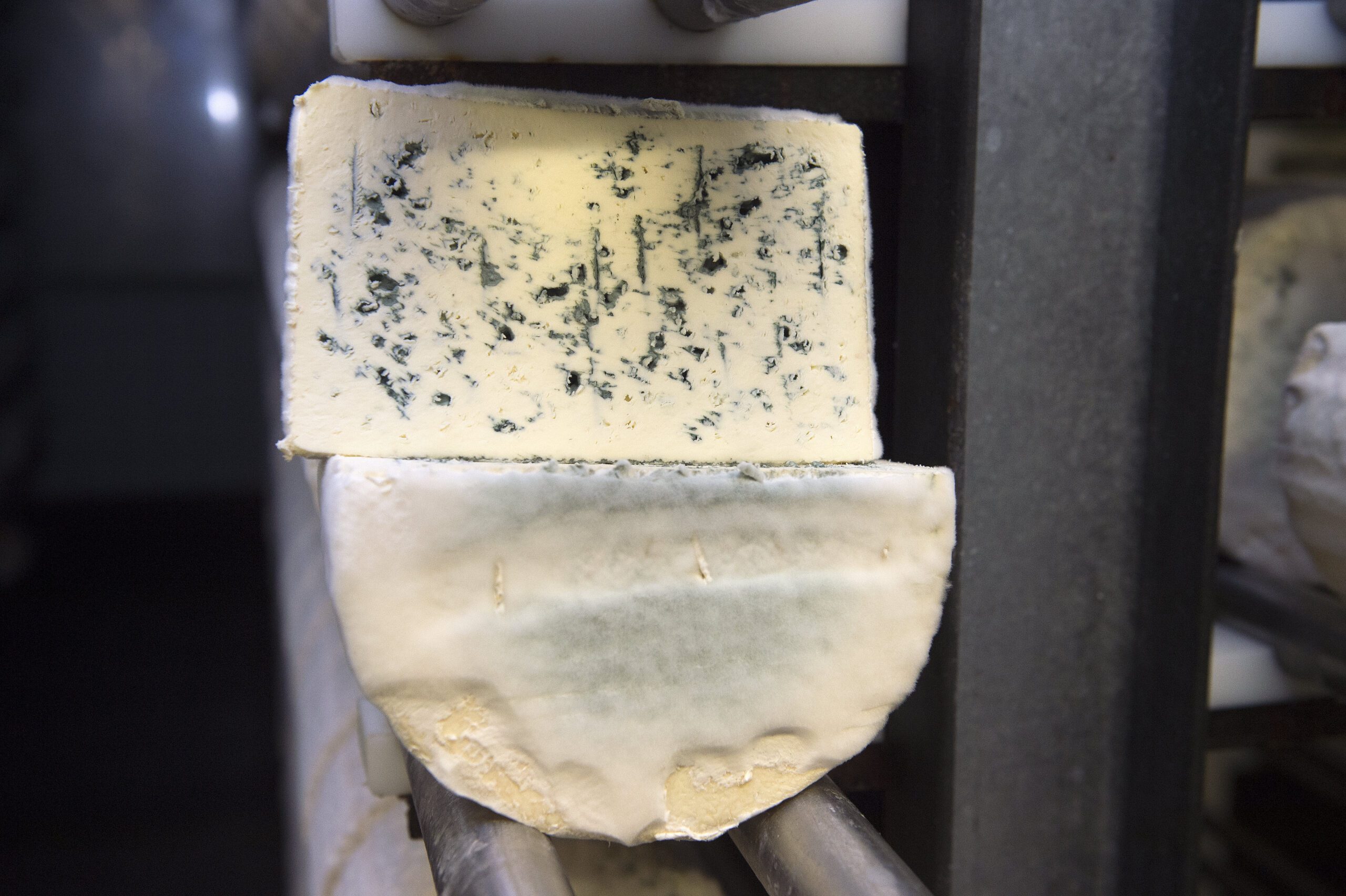
Bornholm Cooperative Dairy's’blue cheese is popular on the US market. Archive photo: Jens-Erik Larsen
A small blue cheese has made Bornholm world-famous as a major export success.
Bornholm Co-operative Dairy, founded in 1950, has made a major impact across the Atlantic, where the dairy from Klemensker's blue cheese is used in American cooking and is winning remarkable awards.
Over the years, the dairy has gained recognition for its products made from local Bornholm milk. It has also specialised in mould cheeses and other speciality products, which are popular both in Denmark and abroad. Especially abroad. As much as 96 per cent of the dairy's revenue comes from abroad. The global market is quite simply big business for Bornholms Andelsmejeri.
”We are present in 38 countries now. That is a conscious strategy on our part. We want to spread out and not become too dependent on a single market. We live in an era where a presidential election can introduce a new tariff wall overnight, putting us at a disadvantage compared to competitors. If Donald Trump becomes the next US president, we can expect a 25 per cent tariff wall. That is why it is important for us to be present in many markets, says Per Olesen, CEO of Bornholms Andelsmejeri.
We have the milk, which is the company's most important raw material, right on our doorstep. Bornholm milk is of a high quality, provides the flavour that we need, and, as Danish milk, has a fantastically good reputation around the world. Regardless of nationality, people know that Danish milk is in a class of its own, and it is also milk that makes up 85 per cent of our costs, which is why high-quality milk is completely central to us.
Fierce competition
Competition on the international cheese market is intense, with many players from countries such as France, Italy, the Netherlands and Denmark producing unique and traditional cheeses. Consumers' rising demand for premium products, sustainability and innovation is driving this fierce competition. At the same time, global trade agreements and tariffs are challenging market access. Local authentic production, branding and quality play key roles in winning market share in this competition, yet a Bornholm cheese must still adapt its taste to the local culture, explains Per Olesen.
”There is a big difference in food culture. In a couple of weeks, we are receiving a visit from representatives from Japan, and the Japanese market does not want a cheese that is too sharp or overpowering in flavour. So there, our famous blue cheese needs to be toned down in flavour strength, so that it just gently tingles the tip of the tongue. The cheese is used there in fusion cuisine and contributes the umami flavour that the Japanese appreciate, similar to soy and miso flavours.”
It looks different in the USA. Here, blue cheese has won awards as an element in a blue cheese cheeseburger, and that characterises the American market, says Per Olesen: ”Americans don’t eat cheese in the same way as they do in the Mediterranean zone, for example with a piece of bread. There, you eat the cheese for the sake of its own flavour and experience. In the USA, it’s a flavour enhancer in burgers, a dip for buffalo wings, or a dressing for salads, and there the cheese has to have full-on flavour to stand out as a taste component.”
When cheese is to be sold to the entire world from a dairy on Bornholm, the scope and volume need to be just right in order to understand the process when cheeses are sent out to the corners of the earth.
”We produce around 700 million kilos of cheese a year. They are shipped out in about 400 containers throughout the year. All cheeses are produced right here on Bornholm. That is a completely conscious choice on our part. We want to avoid flying products out to our customers, and we are also at a point where it doesn't make sense for us to produce small batches for small retailers. We need to reach a level where we can say that on that day, and all day long, we are producing cheeses for that very market. Then we reach a scale where it makes sense for us when we can send off full containers.”
But why not establish sister dairies around the world?
The answer lies in the fields around Bornholm.
Milk from Bornholm is renowned for its high quality, as it comes from cows that graze on the island’s clean, unspoilt countryside. The fresh air and natural surroundings contribute to the milk’s rich flavour and high nutritional content, which promotes local dairy products.
”We have the milk, which is the company's most important raw material, right on our doorstep. Bornholm milk is of high quality, provides the flavour that we need, and, like Danish milk, has a fantastically good reputation around the world. Regardless of nationality, people know that Danish milk is in a class of its own, and it is also the milk that accounts for 85 per cent of our costs, which is why high-quality milk is completely central to us, says Per Olesen.

Bornholm's Co-operative Dairy is based in Klemensker, but has a global market. Archive photo: Jens-Erik Larsen
The significance of Bornholm
Does Bornholm mean anything else to the company?
”As a brand it is more about the Danish stamp of approval, but calling Bornholm home makes for a good story. That story is enhanced when we have guests from abroad who are shown around our wonderful island. Then it is pure idyllic charm that reinforces our message about good milk. For Americans and Japanese, as well as others, a visit here with us on Bornholm is quite exotic,” explains Per Olesen. Although Bornholms Andelsmejeri's products have made landfall in 38 countries, getting cheese into shops abroad is not all that straightforward.
”Partly there is the cultural aspect, but also an assessment of the existing competition. Can we enter with a product for which there will be demand? Taste buds are not the same, so from a flavour variant having to be adapted to a new country, it can take up to two years from the first dialogue with a partner in a country until we are up and running. In that process, we make good use of the Danish embassies and trade councils to gain knowledge and insight into a new market. It is a powerful tool that I can only encourage other companies to use,” encourages Per Olesen.
Although Bornholms Andelsmejeri has its origins on Bornholm, the island also presents challenges, particularly regarding the labour force.
”Like everyone else, we are struggling to get enough qualified labour. We are doing what we can to secure the next generation of dairy technologists and have two to three trainees a year. In addition, we can offer housing and other benefits to employees who want to be part of the dairy. On that score, we are challenged by our location, concludes Per Olesen.
BY SØREN SORGENFRI