

Sustainable collaboration
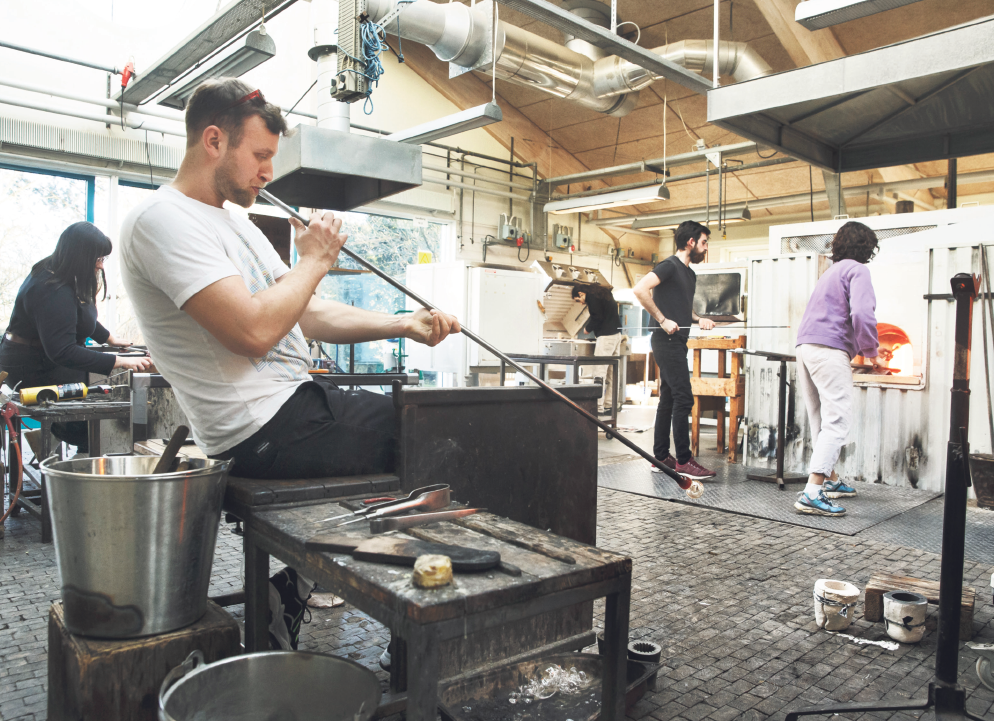
The Royal Danish Academy’s Professional Bachelor’s Degree in Crafts; Crafts in Glass and Ceramics, is promoting innovation and the circular economy through biogas pilot tests on Bornholm.
Bornholm has set ambitious targets to achieve carbon neutrality by 2025 and to be waste-free by 2032. However, to reach these goals, it is necessary to accelerate the green development on the island. One of the potential solutions that has been investigated is the use of biogas, which can replace traditional fossil fuels.
Biogas is produced by recycling organic waste, such as animal manure, wastewater sludge from the food industry and organic household waste.
One of the island's »first movers« in this area is the crafts education programme at the Royal Danish Academy on Bornholm. Last year, the programme took the initiative to meet with Bornholm's
The Royal Academy's Professional Bachelor's Degree in Crafts; Crafts in Glass and Ceramics. Bioenergi ApS in Aakirkeby to investigate the possibilities further.
– Following the meeting, we were aware that there might be potential for a development partnership, says Viki Noorman Kert, who is general manager of the Royal Danish Academy's craft program, adding that this became even clearer during an innovation workshop held by Business Center Bornholm and Energy Cluster Denmark the same year in the project National Centre for Green Energy.
Georg Koefod, operations manager for Bornholms Bioenergi ApS, agrees. He has participated in two innovation workshops and sees many opportunities.
– Firstly, it's great to meet the companies that are going to offtake our biogas and hear their views on the future and what they're looking for. It also helps make our work easier in terms of knowing what the gas consumption is on Bornholm, he says.
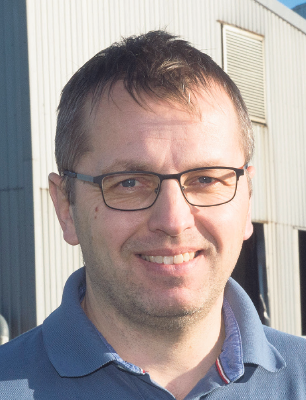
– Firstly, it's great to meet the companies that are going to offload our biogas and hear their views on the future and what they are looking for. It also helps to make our work easier in terms of knowing what the gas consumption is on Bornholm.
At the forefront of developments
Following the initial innovation workshop, Business Center Bornholm offered to make the Crafts in Glass and Ceramics education a case study for a team of students from Aalborg University (AAU) and the University of Southern Denmark (SDU). The focus was on investigating the possibilities of using biogas for the workshops' reheating furnaces, and the institution, which was challenged by the rising electricity and gas prices of the time, accepted without hesitation.
And now preparations are underway to install a test unit at the school this summer.
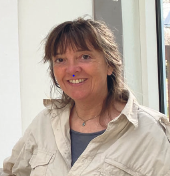
– Apart from being better for the climate, it is also in line with our values. As an educational programme for craft and design, where energy is a major cost factor in practising one's profession, it is important that we are at the forefront of the development of the latest green production methods. This gives students the best conditions for establishing a sustainable working life.
– Aside from being better for the climate, it is also in line with our values. As an educational programme for arts and crafts, where energy is a significant, costly factor in practising one's trade, it is important that we are at the forefront of the development of the latest green production methods. This gives the students the best prerequisites for establishing a sustainable working life, explains Viki Noorman Kert.
She is excited about the result.
– Lehrs are used to heat up glass when processing it. Therefore, they are an important part of the working process. We don't know yet whether the biogas has an effect on the material, such as the glass perhaps going from transparent to having a brown tint, but we don't expect it to. We expect the gas to be clean in its contact with the glass, and that we can gradually expand the use of biogas.
What will you do with the test results?
– We want to advertise that. We can become the first arts and crafts educational institution to use biogas, and that is something special when everything is locally produced – even the energy.
We can pass on important knowledge to the next generation. On that
In a way, it is mega-exciting. Not just for established craftspeople
on Bornholm, but for the subject in general – both in Denmark and in the rest of the world.
A local project
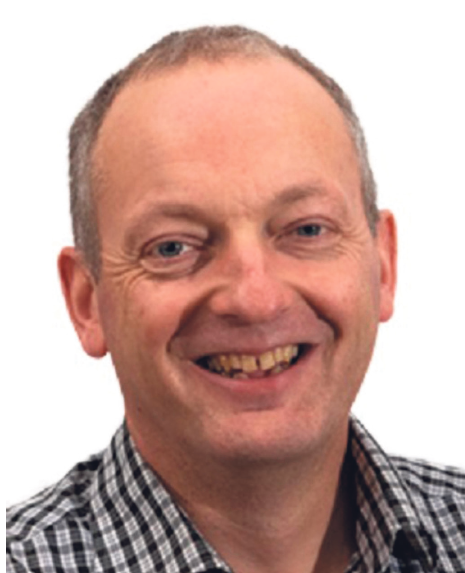
Operations Director at Bigadan A/S, Torben Ravn Pedersen, acknowledges
the perspectives and points out that one would like to increase production
of green energy on Bornholm.
– Generally, we are currently working on getting the necessary permission.
We haven't been involved in Bornholm for very long, but after
Having updated and refurbished the biogas plant, we are ready for a
New phase.
– There is great potential on Bornholm, where we already have
many good partners.
– At the University of Southern Denmark and elsewhere, work is being done on
producing hydrogen (H2) using surplus electricity. If you then take
this hydrogen and reacting it with CO2 from the biogas production,
can you make methane (CH4), which is a form of gas,
that can be used as fuel.
SDU researchers have invented a method that converts the CO2,
which biogas plants emit, into biomethane – also known as green gas.
Is that something that might be introduced on Bornholm?
– At the University of Southern Denmark and elsewhere, work is being done on
producing hydrogen (H2) using surplus electricity. If you then take
this hydrogen and reacting it with CO2 from the biogas production,
can you make methane (CH4), which is a form of gas,
which can be used as fuel. On Bornholm, there is CO2, which
comes from biogas production, and if you can produce
Brint, can this CO2 be used to make methane? The technology
is still under development, but when it is ready, it will be possible
converting surplus electricity into methane, which can be stored and
used later as fuel.
What does it specifically take to succeed in increasing biogas production?
– We have applied for a new local development plan, which sets the framework for
an expansion of the biogas plant. The next part is to find the
right raw material suppliers – these will primarily be farmers.
The final part is; will consumers buy the green energy at a
price that makes sense?
– It will be a local project, because when there is no fixed gas grid,
where you can take the biogas, purify it and put it into the gas grid,
whether the biogas is to be sold compressed. An example of this is
the collaboration with the Royal Academy, which is therefore extra
valuable.
BY TINA TOFT MØLLER
Bornholms Bioenergi ApS was constructed in 2006/07. At the end of 2018, Bigadan A/S acquired the company, and the plant receives slurry, deep litter and fibre from local farmers as well as Category 3 waste from Danish Crown. The biogas produced is used to generate electricity and district heating in the plant's gas engines. See more: bigadan.dk