
The art of creating a team
How can entrepreneurs make the transition from sole trader to employer as smooth as possible? Rikke Høyer, co-founder of DORA and Commercial Director, offers some advice based on her own experiences.
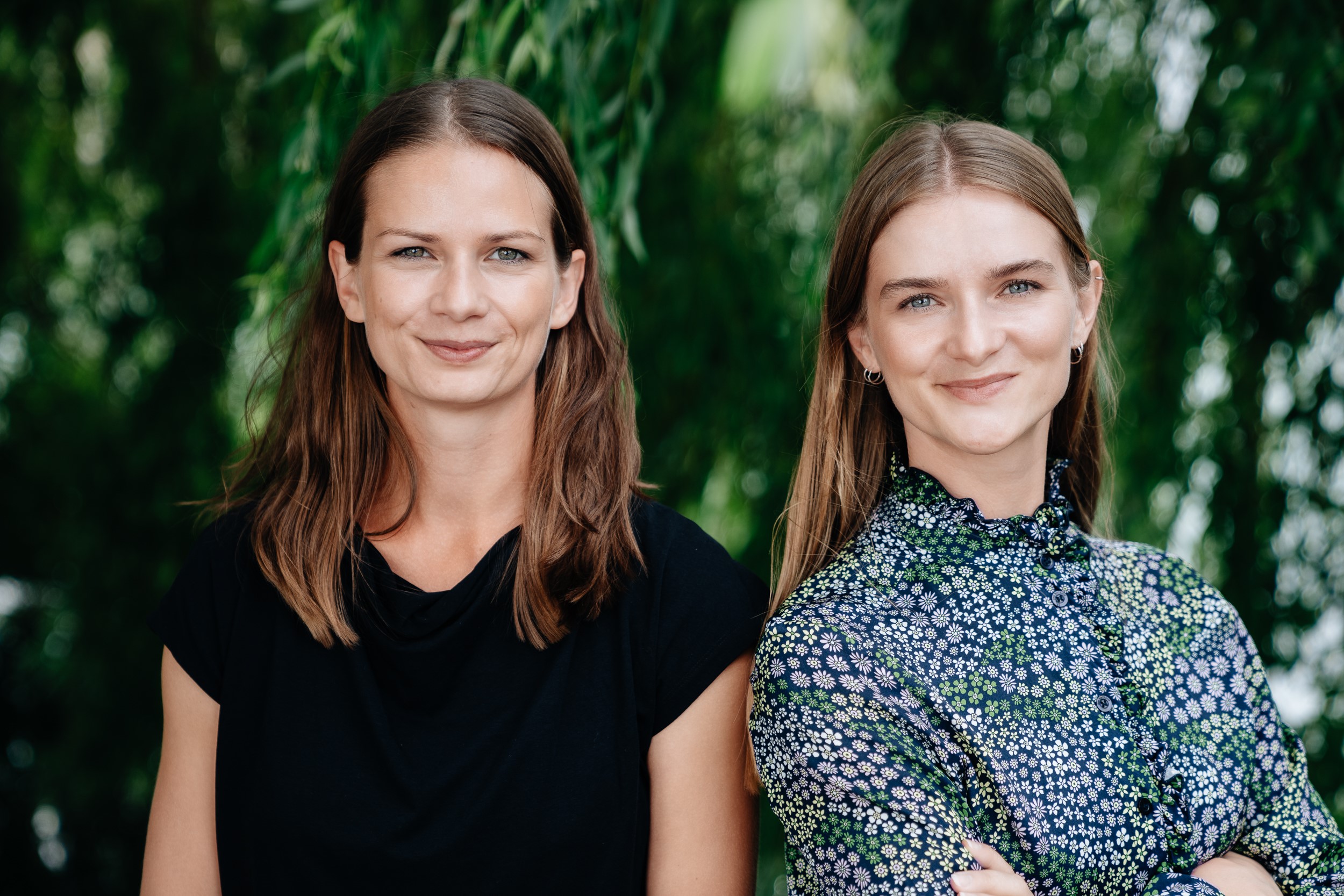
Based on their own experiences, the Bornholm-born entrepreneurial sisters Rikke (left) and Sidsel Høyer have specially developed a system for haulage contractors and freight forwarding companies. Dora Nordic ApS has developed a system that digitises the daily lives of hauliers, enabling them to handle documents such as the waybill directly from their mobile phones. At the same time, the system makes compiling the mandatory CO2 accounts easy and transparent. In February of this year, the company announced that a total investment of four million kroner from sources including the Export and Investment Fund of Denmark will help launch the company into new international markets.
Photographer: Kasper Løjtved
See more at doratms.com
Transitioning from the role of an entrepreneur to leading a company with multiple employees represents a crucial milestone in any startup's journey, and although one may not feel like a natural leader, it is nonetheless possible to acquire the necessary skills.
That is according to CCO Rikke Høyer, who two years ago started the entrepreneurial adventure DORA together with her older sister.
DORA specialises in the digitalisation of hauliers' work processes, including the simplification of their statutory carbon accounting.
In the beginning, the two founders received help from business consultants at, among others, Business Center Bornholm and Erhvervshus Hovedstaden, and they still make use of this, but suddenly a need for more also arose.
Rikke explains: ”Things moved really fast. We secured a million-pound investment and relied on bringing in more skilled labour to ramp up our speed. Fortunately, we found our first employee, our Chief Technology Officer (CTO) Peter, through a professional entrepreneurial network on Facebook. He showed up at just the right time when we were in need of an extremely experienced software developer. At the same time, it was simply a ”match made in heaven', which made the transition very easy for us," says Rikke, who has since added another full-time employee and two full-time freelancers to the team.
Focus on togetherness
In total, DORA therefore consists of six people working full-time to make the company grow. According to Rikke, this has required changes to her approach to work, because in the beginning the focus was ”only” on the DORA concept – the good idea.
– It has been fantastic to get more people on board, as they all bring expertise and new perspectives to the table. But for me, it came as a surprise just how time-consuming management can also be. It took a bit of getting used to at first.
How comfortable do you feel in your management role now, and where do you get your inspiration about management?
– Both my sister and I surround ourselves with many self-employed people in the startup environment. They are an endless source of inspiration – and help! My sister has an education that includes management aspects, so it has been natural for her to take the lead – conversely, I have never seen myself as a born leader. On the other hand, we complement each other, and I have discovered that you can indeed develop your management skills along the way. Among other things, I have had coaching to understand how to work best as a leader and create an environment that promotes well-being.
What has been your most valuable learning or observation so far?
– That it is the little things that make a difference. When you are self-employed, you can easily ”work your socks off” around the clock, but when you get employees it is important to have a culture where, for example, you do not send emails in the evening: It can stress people into feeling that they have to be ”on” all the time. You constantly have to consider the signalling value of what you do, and therefore you must ensure you find a good balance between your work and private life yourself.
What else is a major focus of your and your sister's leadership style?
– Maintaining and developing a healthy working culture. That has been crucial for us right from the beginning. We wanted to create an environment where employees feel motivated and valued. A healthy work environment strengthens collaboration and cohesion, and that is especially important for us in this phase, where we are physically working in several different locations – ranging from Rønne to Copenhagen, Aarhus and abroad. Furthermore, I have moved to Jutland myself, as I am often on the move in connection with client meetings.
What is a concrete example of something you do to boost team spirit?
– We ensure that we maintain positive and constructive communication in our daily work, while at the same time insisting on shared experiences in the physical world. For example, we have held our summer parties and Christmas lunches on Bornholm, which has worked incredibly well. It is also of great value that the employees know who we are and where we come from. After all, Bornholm has shaped us and is a big part of our identity.
One thing is to be a manager – another is to lead together with a family member. How does that work?
– Really good. We have clearly defined areas of responsibility, and where we overlap is in management. Because we are siblings, we talk to each other all the time anyway, and it's especially great that we have each other as professional sounding boards. We almost just see it as a special advantage.
What is your best advice for new managers?
– Ask other entrepreneurs who have been in the same situation as you. There is so much to learn from talking to others. Also try to avoid listening too much to those who lack experience, but still feel that they must give you ”good” advice!
BY TINA TOFT MØLLER
Rikke's advice
- Seek advice:
– We sought advice from professionals and organisations that could help us understand employment law and management strategies, she explains.
- Focus on culture:
– Maintaining a positive working culture was crucial for us. We worked on creating an environment where our employees thrived.
- Open communication:
– We place great emphasis on open communication with our employees. You must feel heard and valued.
- Learn from others:
– Talk to other entrepreneurs who have been through the same process. There is so much to learn from their experience.