

The old power station in Rønne is becoming an innovation house
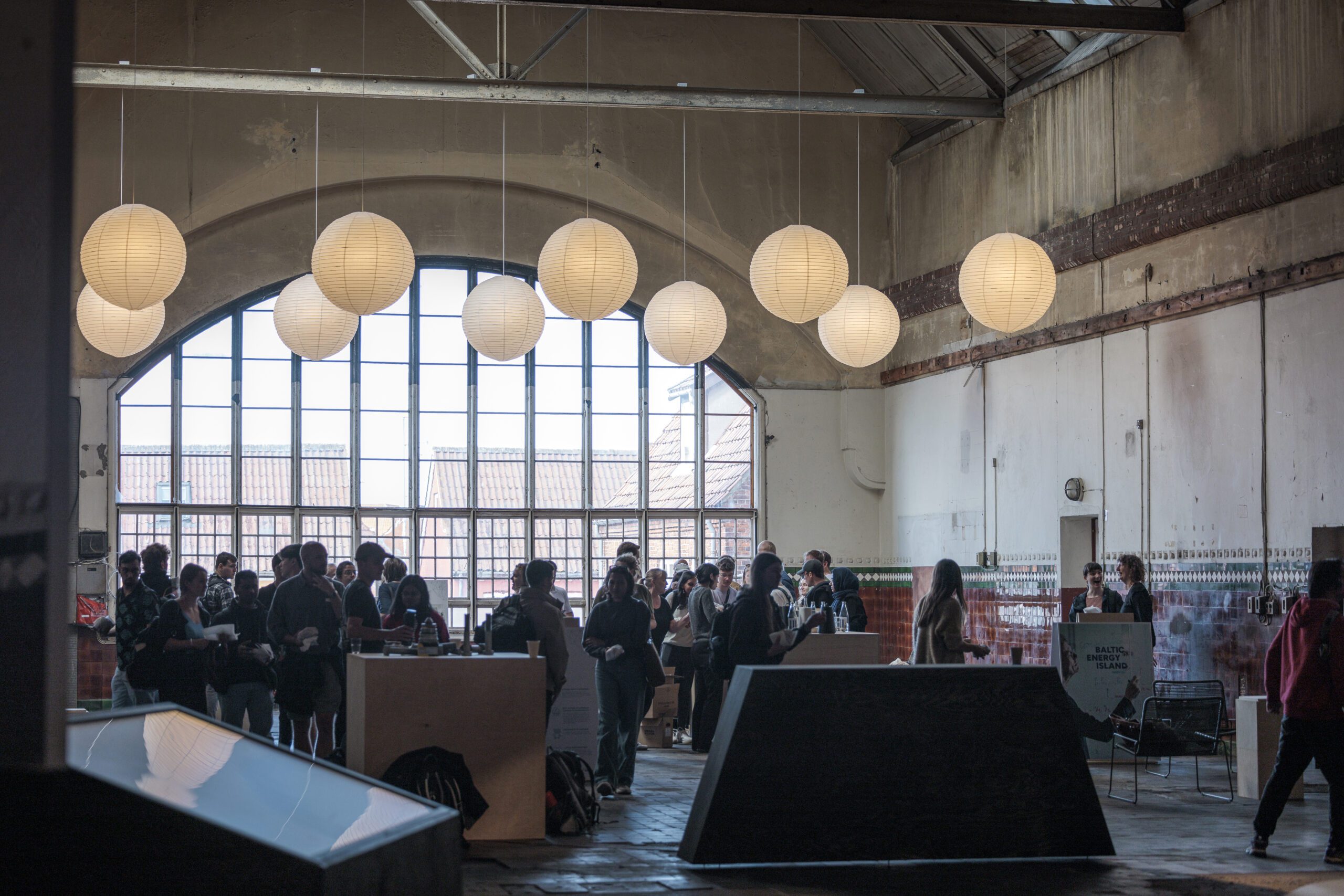
Rønne old power station will be ready as an innovation house in 2028. Photo: Kristoffer Linus
The ambitions are high when DTU and Baltic Energy Island are scheduled to move into the old power station in Rønne in three years' time. By then, the historic building will have been converted into an innovation hub – well aided by the municipality and Realdania By & Byg. This will help attract more students and researchers to the island.
Rønne Power Station from 1910 was originally built to give the town's citizens a better life with the latest technology. It was designed by one of Denmark's best architects at the time and built using the island's finest materials. The power station also lived up to its name for many years, supplying the residents of Rønne with electricity. In recent years, however, the historic building has stood empty. But now the building is once again to point towards the future, when, with the help of both Realdania By & Byg and the municipality, it is converted into an innovation house.
That is according to Søren Møller Christensen, Director of Baltic Energy Island, which in three years' time will move into the building as a tenant alongside DTU. And he is looking forward to it.
– When you look at the building, it makes you feel happy inside, because you can see how many dreams have been put into the building, says the director, who has his own dreams for the innovation house.
– For me, it is a way of reviving the building's way of carrying a vision for society. Because it is a vision for society for Bornholm, and it is a vision for society for Denmark and Europe, that must be elevated with that building.

For me, it is a way of reviving the building's way of carrying a societal vision. Because it is a societal vision for Bornholm, and it is a societal vision for Denmark and Europe, that is to be elevated with that building.
Must be filled with life
When the innovation house is ready in 2028, it will not only house the current activities that Baltic Energy Island has with DTU, but also with other universities, he explains.
– It must be the innovation house of Bornholm, Denmark and Europe within energy islands and the green energy system. It must house visiting students and researchers, and it must attract companies that want to be part of an innovation environment. And then it must lift local existing companies by giving them more innovation power, says Søren Møller Christensen, who wants the innovation house to be full of life from the beginning when they can open their doors in 2028. He envisions collaboration with everyone who wants to join, from international universities and companies to Campus Bornholm, BEOF, Rønne Port, business networks and not least the island's companies. And collaboration is the only way forward, says Søren Møller Christensen, highlighting the collaboration with the municipality so far.
– The municipality has been completely decisive. Without the municipality's backing and their positive way of getting involved constructively to find solutions, it wouldn't have succeeded. That's for certain. It was the municipality's building, after all. It was lying there as a bit of a problem child because there wasn't really any function to put into it. There have been many suggestions for what could be made there. A library and swimming pool have been suggested, among other things, but all attempts until now have foundered, says the director, who is nevertheless pleased that there was backing for an innovation house instead – with support from local foundations, the Danish Board of Business Development and not least DTU to set up the innovation house.
Bornholm as an energy island
There has long been good energy between DTU and Bornholm. In fact, DTU has used the island as an inspirational setting for their students for over 20 years.
– We simply couldn't help coming to Bornholm, which we have used as a testing ground and demo site for our researchers. Bornholm is also an energy island, so it is close to our hearts, and we have been there for many years and worked closely with BEOF, explains DTU's Director Carsten Ohrt, who regards Bornholm as an academically exciting place for the university's students.
Partly for this reason, DTU established a so-called Residential College on Bornholm before a majority in the Danish Parliament (Folketinget) relocated a number of educational programmes and jobs to the provinces in 2021.
– A Residential College is basically the idea of having a physical focal point where we can have educational activities for shorter or longer periods while people are visiting a given place. It is a long, hard slog to build up such an environment so that the students fall in love with it. But we have had more and more students come to Bornholm, and they like being here, so the hope is also to help create life, he says, and adds:
– But a Residential College is only ever as good as everything we put into it. That is why it is important to become part of a local ecosystem that includes everything from the municipality to Business Center Bornholm to companies and public institutions. Baltic Energy Island, for example, has become a very close partner of ours. So at DTU we feel that we are very privileged to have such strong partners on Bornholm. Because then it suddenly becomes interesting for the students to be on Bornholm too, explains the director.
A scoop with space at the power plant
In the long run, it could also boost the island's business community if DTU students develop a liking for Bornholm, he believes.
The slightly hidden agenda in the long run is that we believe the best way to spark an interest is by getting some students to look at things. That could be in collaboration with local actors like Jensen, BEOF or Hasle Refractories, and then the students might suddenly also see a working life for themselves on the island.
Soon the collaboration with Bornholm is entering a new and stronger phase. For when the old power station in Rønne is scheduled to be established as an innovation house, it will be with DTU as one of the major players. And Carsten Ohrt is thrilled to let DTU become a stronger part of the island's business ecosystem:
– We actually came up with the wild idea together with Baltic Energy Island to use the old power station as a framework for us. And now we've succeeded in getting Realdania By & Byg to take it over and renovate it, so that the rest of us can rent space there and use it as our meeting place when we're on Bornholm. It's simply a scoop. The municipality, together with Baltic Energy Island, has made a great effort to make it happen, so it's right on the button, says the director enthusiastically.
– And the fantastic thing is also that local foundations have backed it, so that we've been able to move in across from the museum, allowing us to be there in the interim period. But we're very fond of the power station, which fits well with the narrative we're in, says Carsten Ohrt.
– Once it's been refurbished, you have a completely unique physical gathering point that oozes with the history of energy development, yet is placed in a modern context. This means you can hold some exciting conferences. You can run some incredibly exciting workshops with the students, where they can come out and see something afterwards. A meeting place in itself will attract many on the innovative side, because it will be a place where entrepreneurs can meet a lot of interesting people and find it welcoming and fun to visit, says the director.

They are actually working on the big blade with something that the world wants. And then it is clear that when the energy islands are realised, you will also see that it gives a completely new dimension to how we must then organise ourselves with the green transition on that scale. And not surprisingly, we think it is enormously exciting.
Great future prospects
Carsten Ohrt sees the small ecosystem around the innovation house in the power station as an axis with Campus Bornholm, so that around the power station there are also study environments that young people are drawn to.
– But it is also a place where travellers can visit, and then we can hold conferences there. Just imagine what a build-up to the People's Meeting you could create there, says the director, who is already busy dreaming about the future. And he sees great potential in letting students explore Bornholm's experiments with the green transition with a base in the new innovation house in the power station.
– In fact, work is being done on the large scale with something that the world wants. And then it is clear that when the energy islands are realised, you will also see that it gives a completely new dimension to how we must then organise ourselves with green transition on that scale. And not surprisingly, we think it is enormously exciting, he says with a smile in his voice, before adding that there is also a strong willingness to invest in the green transition on the island.
– We feel we have a very good interplay, and there is a very high level of accommodation to make this happen. There is both a will and an ability to make things happen. And those are very important ingredients, too, when the issue is tricky and difficult. And then I think the house of innovation will be a fun and slightly quirky meeting place that people can experience, and that is already generating a lot of positive energy, he concludes.
BY JOAN ØHRSTRØM
About Rønne Power Station
Rønne Power Station was designed by architect Anton Rosen and built at the beginning of the 20th century as an urban industrial facility to supply the residents of Rønne with electricity. Electricity production ceased around 1960, and until 2003 the buildings were used as a machine workshop. The listed complex has now been purchased by Realdania By & Byg, which, through the acquisition of the facility, has sought to preserve the architecture for posterity. After Realdania By & Byg has completed a comprehensive restoration, the facility will be adapted from 2028 into an innovation house with space for, among others, DTU and Baltic Energy Island.