

What is
circular economy
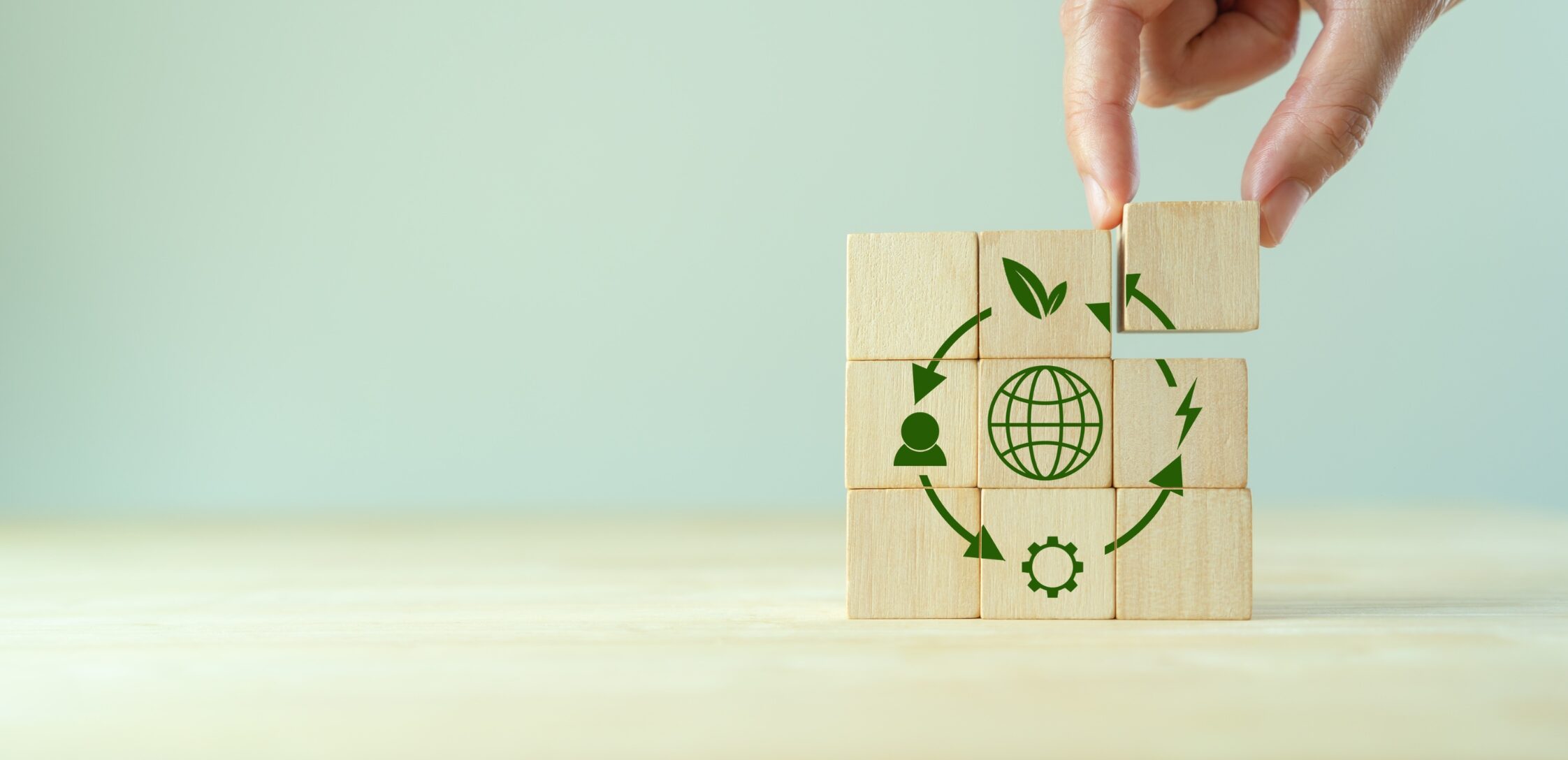
The climate crisis and general political pressure will make the circular economy a new standard. This is according to Steven Kær Bjerke Møller, project manager with a focus on green transition at Erhvervshus Hovedstaden, who delves into the concept here, while Jørn Pedersen, senior business consultant at Business Center Bornholm, assesses the local potential.
In week 11, Denmark marked itself as one of the world's first nations to reach »overshoot day« – the day when we consume our share of the earth's natural resources, meaning that for the rest of the year we live on an ecological credit that the earth cannot catch up with.
In light of this challenge, Denmark also faces ambitious targets for reducing greenhouse gas emissions. By 2030, we must reduce our emissions by 70% compared with 1990 levels, and by 2050 at the latest, we must achieve a climate-neutral society.
In light of all this, the question arises: How can businesses continue to grow? The answer may perhaps be found in the circular economy, a concept currently on the lips of many, and which has become a component of this year's Finance Act agreement. Specifically, 80 million kroner has been allocated to support projects that promote repair and circularity.
– Circular economy is about changing our mindset from take-make-dispose to reuse and recycling. It is not only good for the environment, but can also open up new business opportunities. With a strategic approach to sustainability, businesses can become the driving force for a greener future, says Steven Kær Bjerke Møller, project manager at Erhvervshus Hovedstaden with a focus on green growth.
But how is the circular model defined? The easiest method is to compare it with the model most of us know – the linear one, according to Steven. He draws a horizontal line on a piece of paper and illustrates the traditional linear economy with five milestones: extraction of resources, production at the factory, distribution via intermediaries, consumption by customers and afterwards; disposal as waste.
– Even though in Denmark we are good at seeing waste as more than just waste and, for example, converting it into energy by burning it, a circular economy is more environmentally friendly, explains Steven; – in fact, with a circular economy, one wants to completely abolish waste and minimise our dependence on nature's resources. Møller elaborates: – You create a closed-loop economy where products and materials move in cycles of reuse and recycling, instead of being scrapped. And if you extract a resource from the ground, it has to be one that can be recycled. It is said that society must move from processes that go from ’Cradle to Grave’ to ’Cradle to Cradle’.
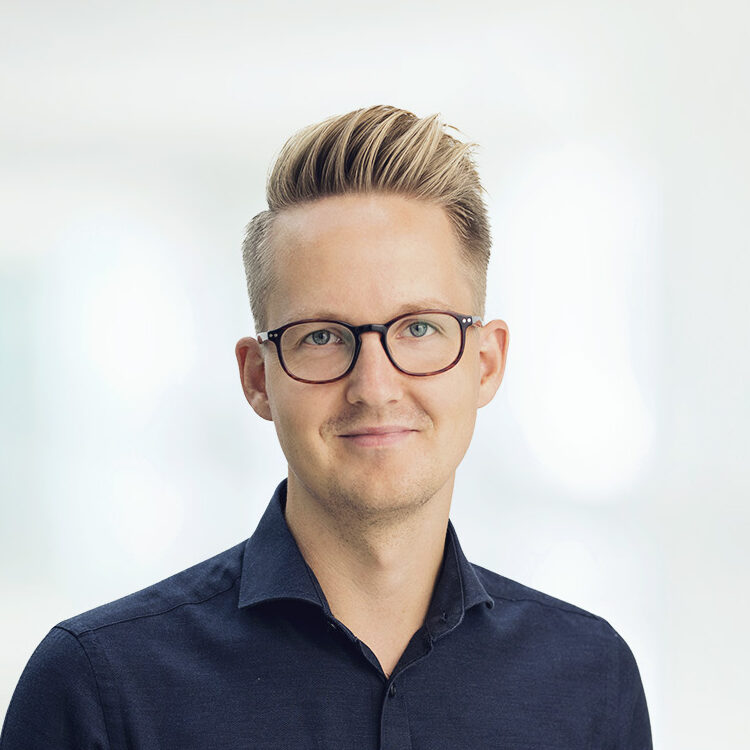
The essence is to find a business model where the product does not lose value over time – and a solution for what to do when the product can no longer maintain value.
A paradigm shift
Realising a circular business model is an extensive project, especially for established companies that have to rethink many things – including where materials are sourced, how they are used and how they are designed so that they can be recycled. – You have to find suppliers who can deliver products of proper quality, and the customer must also be part of the change and prepared to possibly pay more.
And the possibilities, Steven points out, are almost endless: – There are many roads to Rome, and it might seem overwhelming, but we must not forget that the circular economy is a real science. The world has had the circular economy for millennia, whereas the linear one has only existed for a few hundred years.
Crucially, one cannot realise a circular economy alone. – A circular economy requires broad collaboration across the value chain to succeed. The essence is to find a business model where the product does not lose value over time – and a solution for what to do when the product can no longer maintain its value.
– If we talk about clothing, for example, an example of a circular business model could be to rent out new organic cotton clothing to customers who return the old, which is upcycled or, for instance, renewed with the addition of new fibres. The challenge is, of course, that customers might not want to pay the same for something they only have for a short time as for something they have for a longer time, says Steven. – Companies must therefore lower the price of the monthly cost, but this can also lead to the clothing being used more. Therefore, there must be a repair system, and the quality of the materials must be improved.
Fortunately, there are several benefits to reducing one's environmental footprint – including in relation to competitiveness. Steven elaborates: – More and more legislation is being introduced in this area, which to a greater or lesser degree forces circular methods onto large companies that have smaller companies as suppliers, so it is a wise move to start thinking along these lines as a business owner, he says, predicting that many companies will bring much of the production that has been popular to outsource to Asia since the 1970s back to Europe.
– That can after all solve many other challenges that businesses have been hit by over the past many years. Geopolitical tensions, the climate crisis and general political pressure mean that it makes good sense – you get more control over production.
The potential on Bornholm
Jørn Pedersen, senior business consultant at Business Center Bornholm (BCB), acknowledges that the transition to a circular business model is a challenging task. However, he points out concrete examples where Bornholm businesses have taken successful steps: - We already see examples with residual products within the food industry that are good at thinking along those lines - for example from sea buckthorn, which is used in beer, gin and chocolate, he notes. - But the potential is much greater, and we are only just beginning to explore it.
Jørn considers that it might perhaps be easier for start-ups than established businesses to get started with a circular model, but that it is definitely a realistic mindset for everyone. He adds: – There is, of course, a big difference in designing something in from the very beginning compared to having to rethink an entire production and value chain. Fortunately, there are several different opportunities for sparring at BCB, and we can also refer to external advisors who specialise in specific areas. There are also funding programmes so that you can, amongst other things, get help with capital assets that can support the green agenda.
Steven adds, listing examples: – We have both SMV:GRØN, where you can receive grants for consultancy on circular transition, SMV:Grønne Kompetencer, where you can receive grants for courses and much more targeted at the green transition, and last but not least, in cooperation with a number of stakeholders, we have recently launched a major new project worth 196 million kroner for circular transition in value chains – you can find more information at closingloops.dk.
Jørn also recommends that interested businesses invest in training their employees in new methods and technologies that support circular practices, as well as taking inspiration from the circular models of local companies – such as Dewdrop Tiles, which reuses discarded tiles, or STM Enterprise, which demolishes and sorts construction waste for recycling.
– At BCB, we will have a special focus on the circular economy and innovation so that we can support businesses with ongoing sparring, workshops and events, he concludes.
BY TINA TOFT MØLLER
Steven Kær Bjerke Møller
Project Manager with a focus on the green transition at Erhvervshus Hovedstaden

Jørn Pedersen
Senior Business Consultant at Business Center Bornholm
Right to repair
In April this year, the European Parliament adopted the new EU directive on the right to repair for consumers of white goods and electronic products – for example, washing machines and mobile phones. The legislation is intended to make manufacturers design more environmentally friendly products and, among other things, offer cheap repairs with an extended warranty of 12 months or a replacement product. Customers must also have easy access to spare parts, tools and maintenance information.
Sources: europarl.europa.eu, ctwatch.dk